
Tinnitus is the scientific term for a ringing sound in the ears. The most common type of tinnitus does not sound like a ringing phone or bell but instead presents as a constant high-pitch note that may be quite loud and obtrusive some days and softer and less noticeable other days.

Key Takeaways
- Tinnitus is a symptom, not a disease. Finding the cause guides the assessment and management.
- Tinnitus has 8 main causes. They are noise exposure, hearing loss, ototoxic medication, Ménière’s disease, earwax and ear infections, jaw problems, high blood pressure, and tumours or neurological conditions.
- Hearing loss and noise exposure are among the most common causes. Standard hearing tests can miss early inner-ear loss.
- Tinnitus in one ear, tinnitus that pulses with the heartbeat, and tinnitus with sudden hearing loss need early specialist assessment. NICE recommends referral within 24 hours for sudden hearing loss.
- Prescribed medication should not be stopped without medical advice, even when it may be a cause.
What Is Tinnitus?
Tinnitus is the perception of sound with no external source. The sound is usually ringing, buzzing, hissing or humming. It can affect one ear or both ears, and it can be constant or intermittent.
Tinnitus is a symptom, not a disease. Identifying the cause guides the assessment and the management that follows.
What Are the Main Causes of Tinnitus?
Tinnitus has 8 main causes: noise exposure, hearing loss, ototoxic medication, Ménière’s disease, earwax and ear infections, jaw problems, high blood pressure, and tumours or neurological conditions. More than one cause can be present at the same time.
1. Exposure to Loud Noise
Loud noise damages the sensory cells of the inner ear. Sources include explosions, firearms, pneumatic drills, noisy workplaces, nightclubs and loud concerts. A single sudden sound or repeated exposure over time can both trigger tinnitus. The tinnitus can persist after the noise stops.
2. Hearing Loss
Hearing loss is one of the most common causes of tinnitus. Age-related hearing loss (presbycusis) and noise-related hearing loss are the most frequent types.
Standard hearing tests can miss early inner-ear hearing loss. Hearing loss in one ear, or loss that differs between ears, may need further investigation, such as an MRI scan. Read more on the link between hearing loss and tinnitus.
3. Medications
Some medicines are ototoxic, meaning they can affect the inner ear. Examples include certain antibiotics, loop diuretics, high-dose aspirin and some chemotherapy drugs. Whether the effect reverses depends on the drug and the dose taken. See ototoxicity for further detail.
Prescribed medication should never be stopped without medical advice.
4. Ménière’s Disease
Ménière’s disease is an inner-ear condition that causes episodes of vertigo, fluctuating hearing loss, a feeling of ear fullness and tinnitus. The cause is not fully understood.
5. Earwax and Ear Infections
Earwax build-up and ear infections are common, low-risk causes. Both can block or irritate the ear canal and middle ear. Earwax can be removed safely by microsuction wax removal. Tinnitus linked to infection is assessed alongside the infection itself.
6. Jaw (TMJ) Problems
Disorders of the temporomandibular joint (TMJ), which connects the jaw to the skull, can cause or worsen tinnitus. The joint sits directly in front of the ear.
7. High Blood Pressure and Blood-Flow Changes
High blood pressure and changes in blood flow near the ear can cause tinnitus, particularly the rhythmic type that matches the heartbeat.
8. Tumours and Neurological Conditions
Rarely, tinnitus is caused by a growth on the hearing nerve, such as an acoustic neuroma (vestibular schwannoma), or by a neurological condition such as multiple sclerosis. These causes are uncommon. Specialist assessment can identify or exclude them.
Concerned About Your Tinnitus? Speak to a Specialist
Harley Street Audiovestibular Clinic offers specialist tinnitus assessment led by a consultant physician in audiovestibular medicine. Call 020 3480 9630 or make an enquiry to arrange an appointment.
What Are the Types of Tinnitus?
Tinnitus is grouped into 5 types, based on how it sounds and where it comes from.
Type | Description |
Subjective tinnitus | Heard only by the affected person. This is the most common type. |
Objective tinnitus | Caused by muscle contractions or blood-vessel abnormalities. An examiner can sometimes hear it. |
Pulsatile tinnitus | Rhythmic sound that matches the heartbeat. |
Neurological tinnitus | Linked to conditions affecting the hearing nerve or brain. |
Low-frequency tinnitus | A persistent hum or rumble that is hard to place as internal or external. |
Why Does Early Specialist Review Matter?
Early specialist review matters because the cause of tinnitus determines what investigation is needed. Tinnitus is often under-investigated outside specialist audiovestibular services, because training in hearing and balance medicine is limited in UK medical education.
Early specialist assessment is advised for tinnitus that:
- affects one ear only
- pulses in time with the heartbeat
- starts with sudden hearing loss
- occurs with dizziness, vertigo or neurological symptoms
- follows a head injury
Tinnitus with sudden hearing loss needs urgent assessment. NICE recommends referral within 24 hours.
How Is Tinnitus Investigated at Harley Street AVM?
Tinnitus is investigated by a consultant physician in audiovestibular medicine, starting with a clinical history and hearing assessment. Dr Arun Pajaniappane leads the clinic.
The assessment can include:
- a detailed history of the tinnitus, hearing, medication and noise exposure
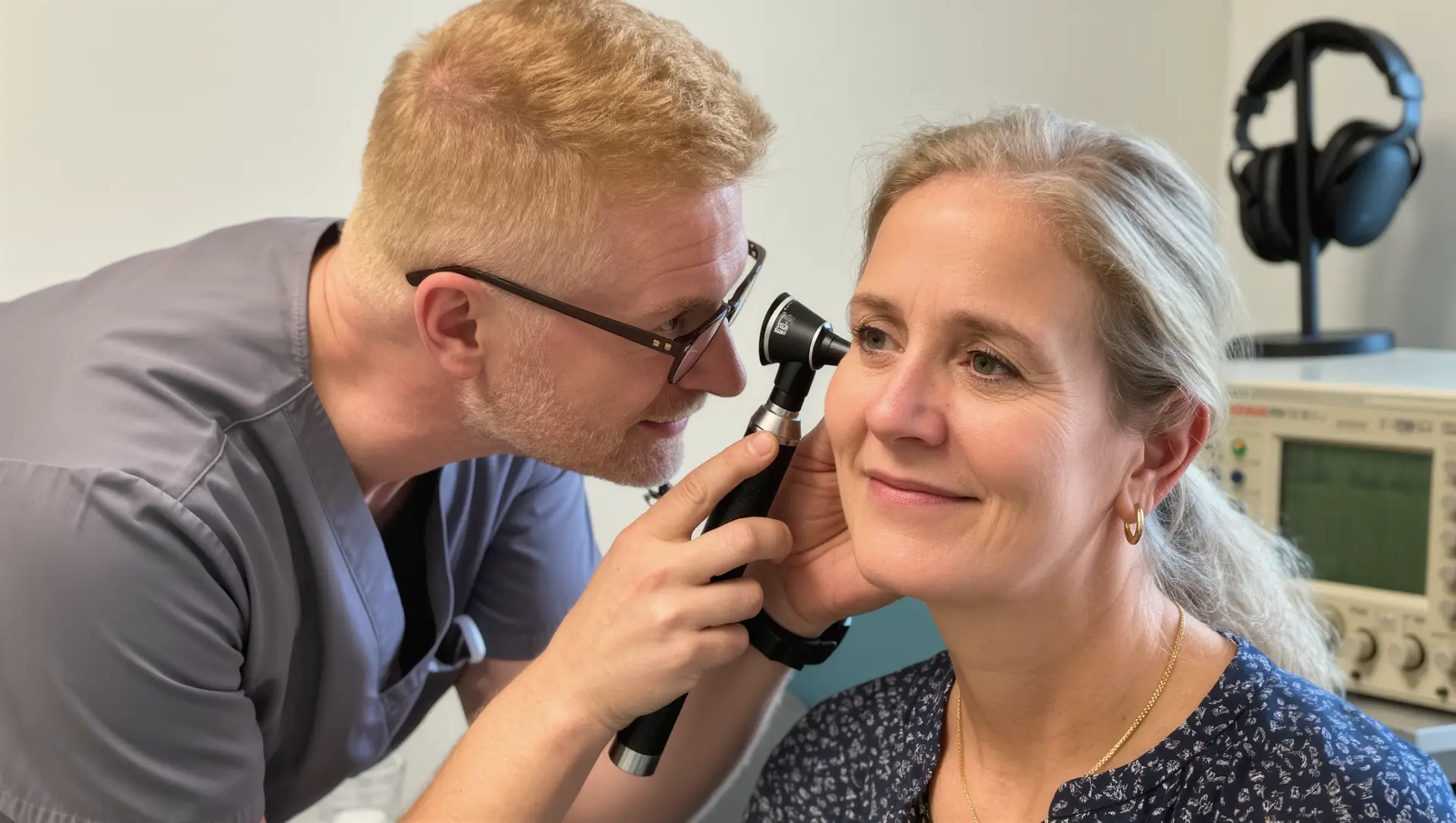
- an ear examination
- pure-tone audiometry to measure hearing thresholds
- MRI and CT scans when the pattern of symptoms indicates imaging is needed
The findings determine the management plan. Tinnitus that disturbs sleep is covered in tinnitus and sleep.
Book a Tinnitus Assessment at Harley Street AVM
Harley Street Audiovestibular Clinic provides specialist tinnitus assessment at 86 Harley Street, London W1G 7HP, with a second location at Centennial Park, Elstree. To book, call 020 3480 9630 or make an enquiry.
Frequently Asked Questions
What is the most common cause of tinnitus?
Hearing loss and noise exposure are among the most common causes. Age-related hearing loss and noise-related inner-ear damage frequently occur together.
Can stress or anxiety cause tinnitus?
Stress and anxiety are associated with tinnitus and can make it more noticeable. They are not usually the only cause, so a hearing assessment is still advised.
Can hearing loss cause tinnitus?
Yes. Hearing loss is one of the most common causes of tinnitus. Early inner-ear loss may not appear on a standard hearing test.
Can medication cause tinnitus?
Yes. Certain antibiotics, loop diuretics, high-dose aspirin and some chemotherapy drugs can cause tinnitus. Prescribed medication should not be stopped without medical advice.
Is tinnitus in one ear serious?
Tinnitus in one ear is not always serious, but it needs specialist assessment. It can be linked to hearing loss that differs between ears or to conditions that need scanning.
When should tinnitus be seen by a specialist?
Specialist review is advised for tinnitus in one ear, pulsatile tinnitus, tinnitus with sudden hearing loss, dizziness or neurological symptoms, or tinnitus that persists. Early review is preferable.