
This UK guide explains what pulsatile tinnitus is, what causes it, the red flags to know, and what specialist assessment involves.
Pulsatile tinnitus is a rhythmic sound in one or both ears that often beats in time with your heartbeat. It can feel unsettling, but in many people, it is linked to harmless changes in blood flow or middle-ear function rather than a serious illness. That said, pulsatile tinnitus always deserves a proper medical review, because in a small number of cases, it can point to a vascular cause that needs treatment.
What is pulsatile tinnitus?
Pulsatile tinnitus is a form of tinnitus in which the sound has a rhythmic, beating quality, usually described as whooshing, thumping, or swishing. It can be in time with your pulse.[1] You may hear it in one ear, both ears, or centrally inside your head.
It differs from the more common form of tinnitus, which produces a constant ringing or hissing with no obvious rhythm. That difference matters clinically. In pulsatile tinnitus, the source can often be a physical change in blood flow or middle-ear structure, which means the cause can be identified and treated.
Doctors divide pulsatile tinnitus into two types. Objective pulsatile tinnitus is rare and can occasionally be heard by a clinicianr.[5] Subjective pulsatile tinnitus, the more common type, can only be heard by you.
What does pulsatile tinnitus sound like?
The sound varies between people, and the description you give your clinician helps narrow down the likely source.
Common descriptions include:
- A whooshing or rushing sound that pulses with your heartbeat
- A rhythmic thumping or thudding inside the ear
- A clicking or fluttering: this pattern more often points to a muscle-related cause than a vascular one[5]
- A sound that gets louder when you lie down, exercise, or turn your head
- A noise that changes when you press gently on the side of your neck
Note any changes in how loud the sound is, when it started, and whether it is in one ear or both. These details matter more than you might expect.
What causes pulsatile tinnitus?
There are many possible causes. Most are benign, but a specialist assessment is what establishes which one applies to you.[3][4] Causes are usually grouped as vascular, non-vascular, or systemic.
Vascular causes
These involve blood flow in arteries and veins near the ear. They are the most common source of a sound that pulses in time with the heartbeat.[4][5]
- Turbulent flow in the carotid artery or jugular vein (often the culprit in otherwise healthy adults)[4]
- Narrowing (stenosis) of a blood vessel in the neck or at the skull base
- Aneurysm of brain blood vessel
- Arteriovenous malformations or fistulas, where arteries and veins connect abnormally[4]
- Idiopathic intracranial hypertension (raised pressure inside the skull, not caused by a known condition)
- A high-riding or dehiscent jugular bulb, a normal anatomical variation in some people[5]
Non-vascular causes
These do not involve abnormal blood flow but can still create a rhythmic sound or make the normal pulse easier to hear inside the ear.[5][6]
- Glomus tumour of the middle ear – A middle ear glomus tumor (often called glomus tympanicum) is a rare, typically benign, vascular growth. These tumors can grow and damage surrounding bone and nerves.
- Middle-ear conditions such as glue ear, infection, or eustachian tube dysfunction (a blocked or poorly functioning tube connecting the middle ear to the throat)
- Tensor tympani or stapedial myoclonus: involuntary contractions of small muscles inside the ear
- Superior semicircular canal dehiscence: a thinning of the bone that covers part of the inner ear[5]
- Wax or fluid in the ear canal that amplifies sounds which are normally inaudible
Systemic causes
Sometimes the ear itself is entirely healthy. Changes in how hard or fast the heart pumps can make normal blood flow more audible.[1][2]
- High blood pressure
- Anaemia (low red blood cells) or an overactive thyroid, both of which increase cardiac output
- Pregnancy, which raises blood volume
- Stress, anxiety, and disrupted sleep, which can sharpen awareness of internal body sounds
- Migraine
- Certain medications, including some antihypertensives and hormonal treatments
Tinnitus UK notes that pulsatile tinnitus is usually caused by a change in blood flow or in your awareness of that flow in vessels near the ear.[2] NHS guidance adds that hearing your heartbeat in your ear is a symptom that should be reviewed if it persists.[1]
Pulsatile tinnitus in one ear: what does it mean?
A sound in one ear only, called unilateral pulsatile tinnitus, is taken more seriously than the same sound in both ears. This is because a one-sided noise is more likely to come from a localised cause near that ear rather than a whole-body factor such as anaemia or raised blood pressure.[3][4]
Whilst many causes are benign, a one-sided rhythmic sound should be assessed. Current UK and international guidance is clear on this: new, persistent, one-sided pulsatile tinnitus warrants specialist review.[3][6]
When to worry: red-flag symptoms
Most pulsatile tinnitus is not an emergency. There are, however, features that should prompt a same-day medical review.[1][3] Contact your GP, call NHS 111, or attend A&E if your pulsatile tinnitus is accompanied by any of the following.
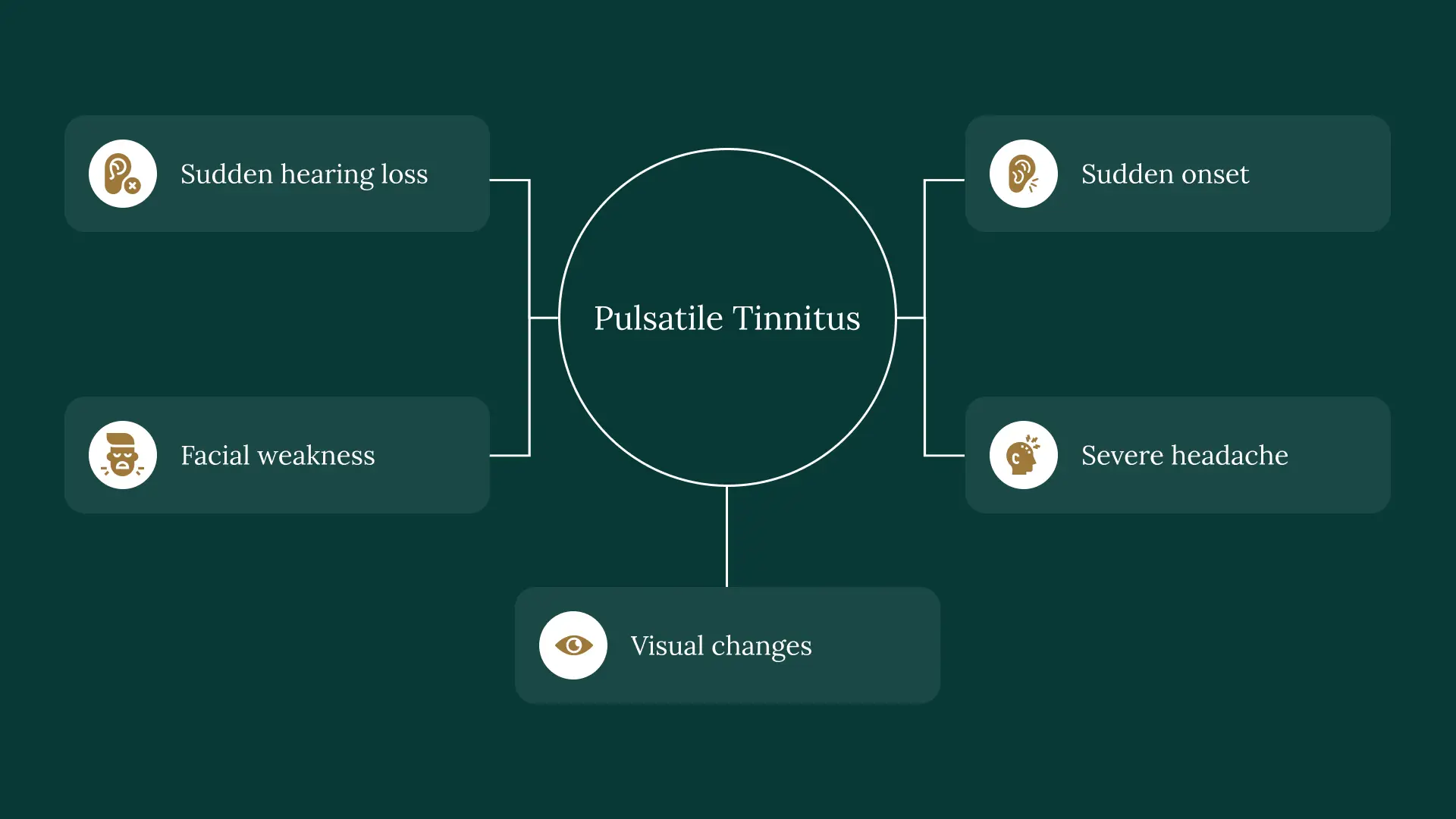
Red-flag features at a glance
Seek urgent advice if your pulsatile tinnitus is accompanied by any of the following:
- Sudden onset of the sound, especially in one ear
- A severe, new, or unusual headache, particularly one unlike any previous headache
- Visual changes: blurring, double vision, or brief loss of vision
- Facial weakness, facial numbness, or difficulty speaking
- New hearing loss or vertigo (a spinning or dizzy sensation) on the same side as the sound
- A recent head injury, ear infection, or surgery
- High blood pressure that is not well controlled
- The sound is getting noticeably worse over days or weeks
Call 999 immediately if you develop stroke-like symptoms: sudden facial droop, arm weakness, or slurred speech. These are not tinnitus symptoms, but they always take priority over everything else.
If your symptoms are stable and you want a clear answer, a consultant-led pulsatile tinnitus assessment will tell you what is causing the sound and whether anything needs to be done about it.
How is pulsatile tinnitus diagnosed?
The aim of assessment is twofold: to find the source of the sound and exclude the conditions that need active treatment.[3][4] A specialist audiovestibular review typically involves four stages.
A detailed clinical history
Your medical consultant will ask when the sound started, whether it is in one ear or both, whether it pulses with your heartbeat, and what makes it louder or quieter. They will review your general health, medications, blood pressure, and any linked symptoms such as dizziness, hearing loss, or headache. The history alone often points strongly towards one category or cause.
Physical examination
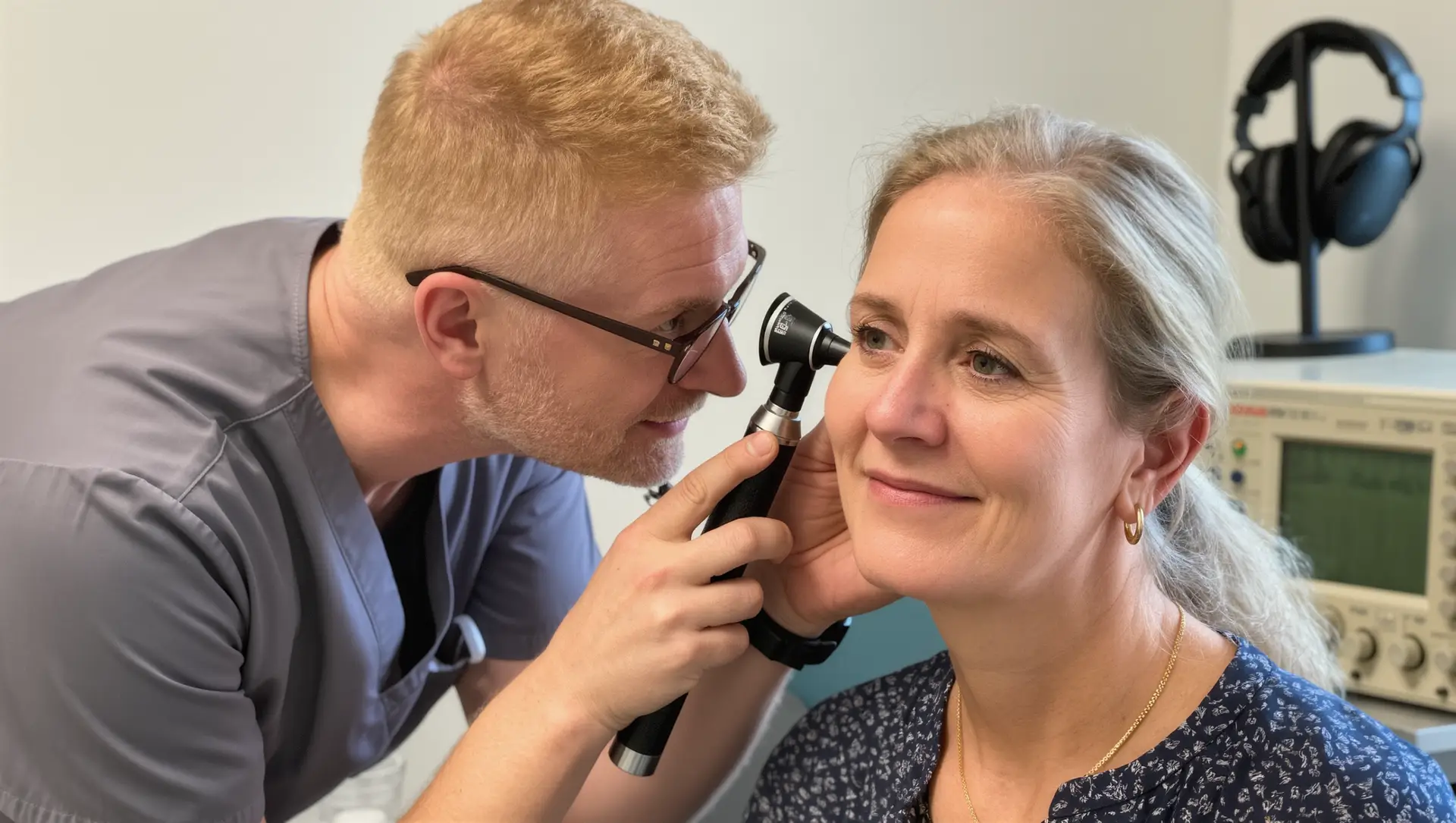
This includes inspecting the ear canal and eardrum, listening to the neck and skull with a stethoscope, and checking blood pressure and pulse. Gentle pressure on the neck or a change in posture can briefly alter the sound, which can be a useful diagnostic clue.[5]
Hearing and balance tests
Most patients have a pure tone audiogram (a standard hearing test) and tympanometry (which measures how the eardrum and middle ear are working).[3][6] If you also have dizziness or a sensation of pressure in the ear, your consultant may add vestibular function tests, which assess the balance system in more detail.
Imaging and blood tests
In pulsatile or any form of tinnitus, imaging is often recommended when a vascular cause is suspected.[4][5] Options include MRI with MR angiography (which shows blood vessel anatomy), CT with CT venography, or duplex ultrasound of the neck vessels. Blood tests may check for anaemia, thyroid problems, or signs of infection.
Your medical consultant will only request tests that are important and will explain the reason for each one before it is arranged.
Treatment for pulsatile tinnitus
There is no single treatment. The right approach depends entirely on what is causing the sound.[3][4]
Treating the underlying cause
Where a specific cause is found, treating it is the first priority:
- Lowering blood pressure if hypertension is contributing[1]
- Correcting anaemia or a thyroid problem
- Managing middle-ear infection, fluid, or wax
- Weight management and medical therapy in idiopathic intracranial hypertension
- Specialist neurovascular treatment for arteriovenous fistulas, aneurysms or significant vessel narrowing. These cases are managed by interventional radiology or neurosurgery colleagues, and your audiovestibular consultant will remain involved throughout[4]
Many patients find that once a contributing factor is identified and treated, the sound either reduces or becomes much less intrusive.
Sound and lifestyle strategies
For cases where no specific structural cause needs treatment, or while investigations are underway, supportive approaches can make a real difference to daily life:
- Sound enrichment: a low-level background sound (a fan, soft music, or a white-noise machine) gives the auditory system something else to process, which can reduce how prominent the tinnitus feels
- Good sleep habits, since tiredness reliably makes tinnitus worse. See our guide on tinnitus and sleep[2]
- Stress management: cognitive behavioural therapy (CBT) has good evidence for reducing the distress associated with tinnitus, even when the sound itself does not change[3]
- Reducing caffeine, alcohol, and nicotine, particularly if you notice these make the sound louder
- Regular exercise with blood pressure monitoring, especially if hypertension is involved
For more on how the nervous system and stress interact with tinnitus, see our overview of the impact of stress on tinnitus.[2]
Will pulsatile tinnitus go away on its own?
Sometimes. Pulsatile tinnitus linked to a temporary cause (a middle-ear infection, eustachian tube dysfunction, short-term anaemia, or a period of very high stress) can settle once that cause is treated or resolves.[1][3]
When the sound is persistent, in one ear, or getting louder over time, it is unlikely to go away without assessment. An earlier review gives you a clearer answer, a better chance of finding a treatable cause, and often significant reassurance, which in itself can reduce how much the sound bothers you.
Seeing a pulsatile tinnitus specialist in London
At Harley Street Audiovestibular Clinic, pulsatile tinnitus is assessed by consultant audiovestibular physicians who focus exclusively on hearing, tinnitus, and balance. A typical first appointment includes:
- A medical consultant-led history and physical examination
- Core hearing and middle-ear tests at the same visit, where clinically appropriate
- Vestibular function tests if balance symptoms are also present
- A clear written plan for any further investigations
- A summary letter you can share with your GP
- A personalised management plan and follow-up
When more complex input is needed, our clinicians work with neurology, neurosurgery, ENT, and radiology colleagues. You can read more about our team or learn more about our vestibular function tests.
Frequently asked questions about pulsatile tinnitus
When should I worry about pulsatile tinnitus?
Arrange a medical review if the sound is sudden, persistent, in one ear only, or associated with hearing loss, dizziness, severe headache, visual changes, or any neurological symptoms.[1][3] Many causes are benign, but a medical Audiovestibular specialist is the right person to further investigate and accurately diagnose cases that need treatment.
What is the most common cause of pulsatile tinnitus?
The most common cause is altered blood flow in vessels near the ear, most often turbulent flow in the carotid artery or jugular vein.[4][5] Other frequent contributors include raised blood pressure, anaemia, middle-ear problems, and heightened awareness of normal vascular sounds during periods of stress or poor sleep.[2]
Is pulsatile tinnitus dangerous?
Can stress and anxiety cause pulsatile tinnitus?
Stress and anxiety alone do not usually produce pulsatile tinnitus, but they can make you much more aware of sounds that were always there, and can raise blood pressure and heart rate, both of which make the sound louder.[2] Managing stress often reduces how prominent the tinnitus feels, even if it does not eliminate it.
Can pulsatile tinnitus cause hearing loss?
Pulsatile tinnitus itself does not damage your hearing. Some underlying conditions that produce pulsatile tinnitus, including middle-ear infection, superior semicircular canal dehiscence, or certain vascular abnormalities, can also affect hearing.[5][6] This is one reason a hearing test is included in every pulsatile tinnitus assessment.
Does pulsatile tinnitus show up on MRI?
MRI does not capture the sound itself, but it can show many of the structural and vascular causes.[4][5] Specialised sequences such as MR angiography or MR venography highlight blood vessel changes that may be responsible. Your consultant will advise whether imaging is needed and which type is most appropriate for your presentation.
How is pulsatile tinnitus treated on the NHS and privately in the UK?
Both NHS and private routes begin hearing tests and assessment by a specialist.[1][3][6] The treatment depends on the underlying cause and may range from monitoring and lifestyle changes to specialist neurovascular intervention. Private assessment typically offers faster access to a medical consultant-led appointment, combined with on-the-day testing and coordinated imaging.
Speak to a pulsatile tinnitus specialist
A rhythmic sound in the ear deserves a proper answer, not a list of possibilities from a search engine. Our team at Harley Street Audiovestibular Clinic can assess the cause of your pulsatile tinnitus, arrange same-visit hearing tests, and give you a clear plan for what, if anything, needs to happen next.
You can learn more about our pulsatile tinnitus service or contact us to arrange an appointment.
References and further reading
- [1] NHS. Tinnitus. https://www.nhs.uk/conditions/tinnitus/
- [2] Tinnitus UK. Pulsatile tinnitus. https://tinnitus.org.uk/understanding-tinnitus/what-is-tinnitus/types-of-tinnitus/pulsatile-tinnitus/
- [3] NICE Clinical Knowledge Summaries. Tinnitus. https://cks.nice.org.uk/topics/tinnitus/
- [4] Narsinh KH et al. Management of vascular causes of pulsatile tinnitus. Journal of NeuroInterventional Surgery, 2022. https://jnis.bmj.com/content/14/6/601
- [5] Hofmann E et al. Pulsatile tinnitus: imaging and differential diagnosis. Deutsches Arzteblatt International, 2013. https://www.aerzteblatt.de/int/archive/article/148117
- [6] ENT UK. Tinnitus information for patients. https://www.entuk.org/tinnitus