
Broken sleep can make the next day feel harder, so the problem can quickly seem bigger than it is. This guide explains what is happening and gives you realistic changes to try tonight.

If your tinnitus is worse at night, you are not imagining it. Many people find that the ringing, buzzing, or hissing in their ears feels louder once the room goes quiet and they lie down to sleep. For most people, this is common; it is usually not a sign of anything dangerous, and there are simple steps that can help.
Broken sleep can make the next day feel harder, so the problem can quickly seem bigger than it is. This guide explains what is happening and gives you realistic changes to try tonight.
We also look at how poor sleep and tinnitus feed into each other, and the warning signs that mean you should speak to a specialist.
What tinnitus is and why timing matters
Tinnitus is the medical term for hearing a sound that has no outside source. People often describe it as ringing, buzzing, humming, or hissing. It is very common, and for most people, it is not a sign of a serious problem1.
It can be constant, or it can come and go. The volume often changes through the day, which is why many people notice it most in the evening and overnight. Learning your own pattern is a useful first step because it helps you and your clinician work out what makes it better or worse.
For most people, tinnitus is linked to changes in hearing1. In a quiet bedroom, with little else to listen to, your brain pays more attention to that internal sound. This is a normal response, not a sign that something has suddenly gone wrong.
Why does tinnitus feel worse at night?
Tinnitus often feels worse at night because the bedroom is quiet, so there is less everyday sound to cover it. Your brain also has fewer distractions at bedtime, which makes the sound easier to notice. Tiredness, stress, and lying still can all add to the effect.
The most common reasons tinnitus seems louder at night include:
- A quiet room, which removes the background noise that usually hides it.
- Fewer distractions, so your attention settles on the sound.
- Tiredness and stress can make the sound feel more intense.
- Lying down, which can change blood flow around the ears for some people.
Common reasons your tinnitus spikes after dark
Several everyday things can make tinnitus more noticeable in the evening and overnight. Knowing them helps you work out what to change first. You may find that more than one applies to you.
Silence and the contrast effect
During the day, traffic, conversation, and background noise naturally cover tinnitus. At night, that masking sound disappears, so the contrast makes it stand out. This does not mean your tinnitus has worsened. It usually means there is simply less sound competing with it.
Stress, worry, and a busy mind
Stress can sharpen your awareness of tinnitus, and tinnitus can in turn raise your stress. Bedtime is often when the day’s worries surface, which is why the two can feel worse together at night. Tinnitus UK, the British Tinnitus Association, notes that stress and tinnitus are closely linked, and that relaxation can help ease distress.
This can become a habit. If you start to dread bedtime, that worry alone can make it harder to settle. Gentle, regular relaxation can help loosen the link over time.
Tiredness and how the brain filters sound
When you are tired, your brain is less able to filter out the tinnitus signal. Fatigue can also lower your tolerance, so the same sound feels harder to ignore. This is one reason a single poor night can leave the next day feeling worse.
Caffeine, alcohol, and nicotine
Caffeine, alcohol, and nicotine can all disturb sleep, and broken sleep makes tinnitus harder to cope with. Alcohol may help you drop off at first, but it often breaks up sleep later in the night. Cutting back in the evening helps some people, though the effect varies from person to person.
Blood flow and pulsatile tinnitus
If your tinnitus beats in time with your heartbeat, it may be pulsatile tinnitus. Lying down in a quiet room can make this rhythmic sound more obvious at night. Pulsatile tinnitus should always be checked by a clinician, as it can have a treatable underlying cause.
How tinnitus and sleep affect each other
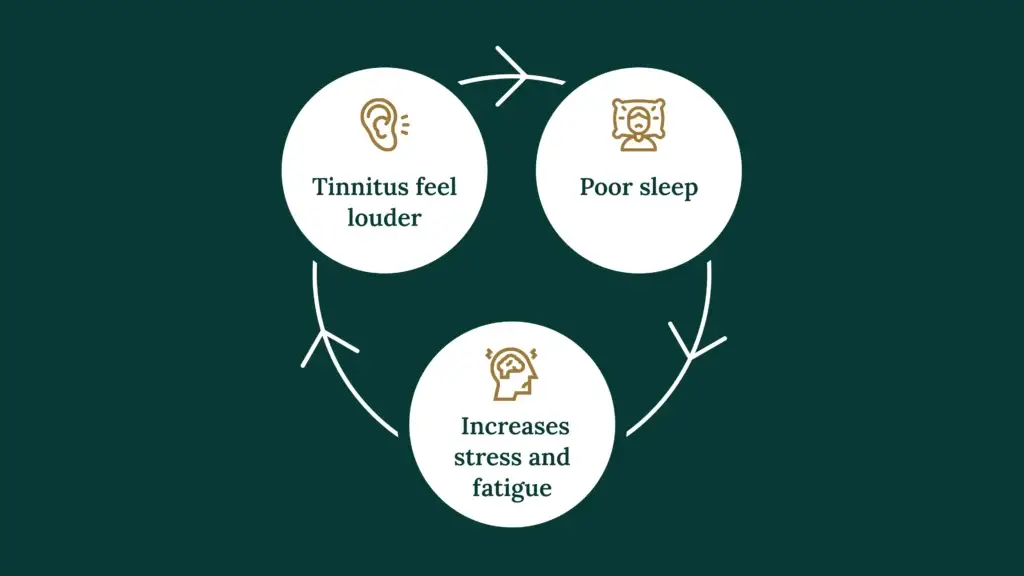
Tinnitus and sleep often form a loop. Tinnitus can make it harder to fall asleep, and poor sleep can make tinnitus feel louder and more upsetting. Over time, this cycle can affect your mood and concentration.
Tinnitus UK explains that a quiet environment makes tinnitus more noticeable, which is why sleep is so often disturbed3. The aim of treatment is usually not to remove the sound completely, but to reduce how much it bothers you and how much it disrupts your rest1.
Breaking the cycle often starts with sleep. When you sleep a little better, tinnitus tends to feel easier, which in turn helps you sleep. Small, steady changes usually work better than trying to fix everything at once.
If tinnitus is affecting your sleep most nights, you do not have to manage it alone. The team at Harley Street AVM can assess your tinnitus and suggest options suited to you.
How to sleep better with tinnitus
There is no single fix that works for everyone, but a combination of small changes often helps. The ideas below are general information, not personalised advice. Your consultant will assess what is most suitable for you.
Use sound enrichment
A quiet room makes tinnitus stand out, so gentle background sound can help. This is sometimes called sound enrichment or sound therapy. Options include a fan, a white noise machine, or an app that plays soft sounds such as rain or waves.
The aim is to make the sound soothing and a little quieter than your tinnitus, not to drown it out. Many people find this makes falling asleep easier. If you share a room, a pillow speaker or a low volume keeps the sound personal to you.
Build a calming wind-down routine
A regular routine signals to your body that it is time to sleep. Try reading, gentle stretching, or a relaxation exercise in the hour before bed. Slow breathing and muscle relaxation can lower the stress that makes tinnitus feel louder.
Keep a consistent sleep schedule
Going to bed and waking at similar times each day helps steady your body clock. A steady routine can improve sleep quality, which may make tinnitus easier to cope with. Try to keep the pattern on weekends too.
Set up your bedroom for rest
Keep your bedroom cool, dark, and comfortable. Avoid bright screens for an hour before bed, as the light can delay sleep. If you watch the clock and worry, turn it away from view.
Manage stimulants in the evening
Caffeine, nicotine, and alcohol can all disturb sleep. Try cutting back in the afternoon and evening to see whether your nights improve. Keep a simple diary so you can spot any patterns over a week or two.
Consider talking therapies
Cognitive behavioural therapy (CBT) is a talking therapy that can help you respond differently to tinnitus. NICE guidance recommends considering CBT for people whose tinnitus causes significant distress or affects sleep4. A Cochrane review found that CBT may reduce the impact of tinnitus on quality of life, with few or no side effects5. Your general practitioner (GP) or a specialist can advise whether it might suit you.
Quick comparison: helpful habits at night
The table below sums up small changes that may help and why they work.
Habit | Why it may help |
|---|---|
Sound enrichment | Adds gentle background sound so tinnitus stands out less. |
Consistent sleep schedule | Steadies your body clock and may improve sleep quality. |
Wind-down routine | Lowers the stress that can make tinnitus feel louder. |
Limit caffeine and alcohol | Reduces broken sleep that makes tinnitus harder to cope with. |
When to see a specialist about tinnitus
Tinnitus is often harmless, but some symptoms need prompt medical review. See your GP or a specialist if any of the following apply.
Seek advice if your tinnitus:
- Comes on suddenly or affects only one ear.
- Beats in time with your heartbeat (pulsatile tinnitus).
- Comes with hearing loss, dizziness, or balance problems.
- Is severe, persistent, or seriously affecting your sleep and mood.
An earlier review usually means any underlying cause can be found and managed sooner. A specialist can confirm what type of tinnitus you have and explain the options. At Harley Street AVM, our consultants assess hearing, balance, and tinnitus in one place. If you are unsure, it is always better to ask. Quick reassurance can ease worry and help you sleep, and most people who seek help find that their tinnitus becomes easier to live with over time.
What to expect from a tinnitus assessment
If you see a specialist, the first step is usually a careful history. You will be asked when the tinnitus started, what it sounds like, and how it affects your sleep and daily life. This helps your clinician understand your experience.
You may also have a hearing test, as tinnitus and hearing changes often go together. Depending on your symptoms, your clinician may suggest other checks to rule out an underlying cause. Pulsatile tinnitus, in particular, may need further investigation.
The aim is to find anything treatable and build a plan that fits you. That plan might include sound therapy, advice on sleep, support for stress, or a talking therapy such as CBT. You will have the chance to ask questions and decide what feels right. Many people feel reassured simply by understanding what is causing their tinnitus. Knowing that a clear plan exists can ease the worry that often makes nights harder.
Speak to a tinnitus specialist in London
If tinnitus is keeping you awake, an expert assessment can help you understand the cause and find a plan that suits you. To arrange an appointment with Harley Street AVM, call 020 3480 9630 or book an appointment online.
Frequently asked questions
Why is my tinnitus louder at night?
Your bedroom is usually quiet, so there is less background sound to mask the tinnitus. With fewer distractions, your brain notices the sound more. Tiredness and stress can add to the effect, so it can feel louder even though it has not actually changed.
Does lack of sleep make tinnitus worse?
Poor sleep can make tinnitus feel louder and more distressing the next day. Tinnitus and sleep often form a loop, where each one makes the other harder. Improving your sleep routine can help ease this pattern.
What can I do to fall asleep with tinnitus?
Gentle background sound, a calming bedtime routine and a consistent sleep schedule can all help. Reducing caffeine and alcohol in the evening may also make a difference. If these steps do not help, a specialist can suggest other options.
Is it bad to sleep in total silence with tinnitus?
For many people, complete silence makes tinnitus more noticeable. Soft background sound, set quieter than your tinnitus, often makes it easier to drift off. You can experiment to find what feels most soothing for you.
When should I see a doctor about tinnitus at night?
See your GP or a specialist if your tinnitus is sudden, in one ear only, or beats in time with your pulse. You should also seek advice if it comes with hearing loss, dizziness or low mood. These features need a professional assessment.
Can tinnitus ever be cured?
There is often no single cure, but many people learn to manage tinnitus so it bothers them far less. Treatment aims to reduce distress and improve sleep rather than remove the sound entirely. A specialist can explain what may help in your case.
References
- NHS. Tinnitus. National Health Service.
- Tinnitus UK (British Tinnitus Association). Living with tinnitus.
- Tinnitus UK (British Tinnitus Association). Tinnitus and sleep disturbance.
- National Institute for Health and Care Excellence (NICE). Tinnitus: assessment and management (NG155).
- Cochrane. Cognitive behavioural therapy for adults with tinnitus.