

A Clear Guide to Unilateral Tinnitus
Consultant-Led Management of Unilateral Tinnitus
Hearing a sound in one ear can feel worrying, but unilateral tinnitus is often linked to local ear changes, hearing variation, or temporary irritation rather than serious disease. We recommend an urgent audiovestibular assessment if it starts suddenly and is accompanied by sudden hearing loss, persistent vertigo, facial weakness, or new neurological symptoms.
Comprehensive Care for Hearing, Vertigo & Balance
Comprehensive Care for Hearing, Vertigo & Balance
Tinnitus Affecting Just One Ear
An Overview of Unilateral Tinnitus
Unilateral tinnitus refers to the perception of sound in only one ear, without an external source. The sound may be described as ringing, buzzing, humming, or whistling, and it can be constant or intermittent. Because it affects a single ear, it often draws attention quickly and can feel more concerning than tinnitus heard on both sides.
This type of tinnitus is commonly linked to differences in hearing between the ears, localised inner-ear changes, ear canal or middle-ear issues, or irritation of the auditory nerve. While it is frequently benign, the one-sided nature means it deserves careful Audiovestibular assessment.
OUR REVIEW
Trusted by Patients,
Proven by Results
EXCELLENTTrustindex verifies that the original source of the review is Google. Dr. Arun Pajaniappane is a brilliant and expert doctor. He was also incredibly friendly, making for a truly excellent experience.Posted onTrustindex verifies that the original source of the review is Google. I had an excellent consultation where both the doctor Arun Pajaniappane and the audiologist were highly professional, attentive, and genuinely responsive to my concerns. They listened carefully to my problems and explained everything clearly throughout the appointment. The procedures carried out were handled with great care and efficiency, which made me feel comfortable and well looked after. I very much appreciated their professionalism and patient-centred approach.Posted onTrustindex verifies that the original source of the review is Google. My first consultation with Dr Arun Pajaniappane was an excellent experience. He listened carefully to me & did extensive tests to try to determine the correct diagnosis.Posted onTrustindex verifies that the original source of the review is Google. my experience from the first phone call to meeting with Dr Arun on Monday has been outstanding. i have been suffering for four years with PPPD and Dr Arun and his team were beyond respectful, helpful and friendly, after feeling totally lost for the last four years being thrown from one HCP to another, I now have hope. Amazing experience and would strongly recommend Dr Arun and this practice for any vestibular disorders.Posted onTrustindex verifies that the original source of the review is Google. Very good service efficient booking and profesional approachPosted onTrustindex verifies that the original source of the review is Google. Fantastic carePosted onTrustindex verifies that the original source of the review is Google. Great experience at Harley AVM. Attended the clinic to have vestibular tests conducted - high professionalism and comfort!Posted onTrustindex verifies that the original source of the review is Google. A really good experience with the whole clinic - quick and efficient booking process, coordination between various teams, and generally a smooth operation. The consultation with Dr Rudy was very informative - he takes the time to understand the issue and answer questions, the tests seem to be very comprehensive and he is clear on the path forward. Would definitely recommend.Posted onTrustindex verifies that the original source of the review is Google. I recommend Harley AVC for anyone struggling with dizziness/pppd who isn’t sure what their next steps should be
Pinpointing the Cause
Diagnosing Unilateral Tinnitus
When to Get Checked
You should get assessed if unilateral tinnitus appears suddenly, follows an ear infection or head injury, or is accompanied by sudden hearing loss, ongoing vertigo, facial weakness, numbness, or changes in vision or speech. These features require prompt audiovestibular review to exclude significant inner-ear or neurological causes.
You should also seek assessment if the sound persists, becomes louder, or interferes with daily activities, sleep, or concentration, or if there is a noticeable hearing difference between ears. Early evaluation helps guide appropriate investigations and timely management.
How We Assess Unilateral Tinnitus
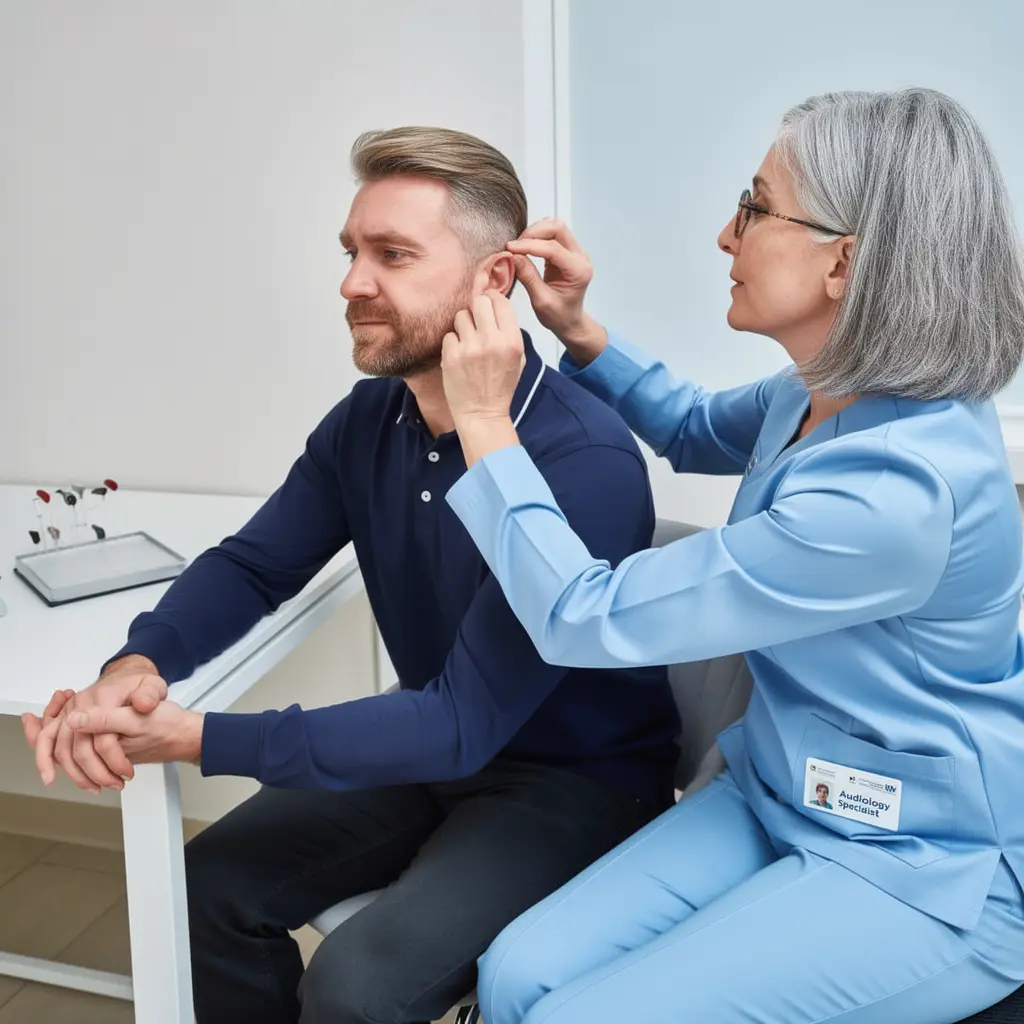
At Harley Audiovestibular Clinic, we begin with an in-depth, one-to-one consultation led by a senior audiovestibular consultant. Time is taken to understand why tinnitus affects only one side, exploring onset, pattern, triggers, and daily impact. We discuss hearing differences, ear pressure or pain, balance symptoms, neurological changes, medical history, medications, noise exposure, and any recent infections or injuries.
Using this information, we arrange targeted audiovestibular investigations. These may include detailed hearing assessment, middle-ear analysis, and specialised tests of inner-ear and auditory nerve function. Where appropriate, we recommend further imaging or medical tests, aiming to identify contributory factors, exclude significant pathology, and guide clear next steps.



Major Insurance Providers Accepted








DIAGNOSTIC TESTS
Specialist Tests to Assess Hearing, Balance and Inner Ear Health
Harley Street Specialists in Hearing, Dizziness & Balance
Specialist Care for Unilateral Tinnitus
Every Unilateral Tinnitus case is different. Your consultant will create a tailored plan to address your specific symptoms and lifestyle – when it started, how it affects your day, and which tests and treatments are right for you.