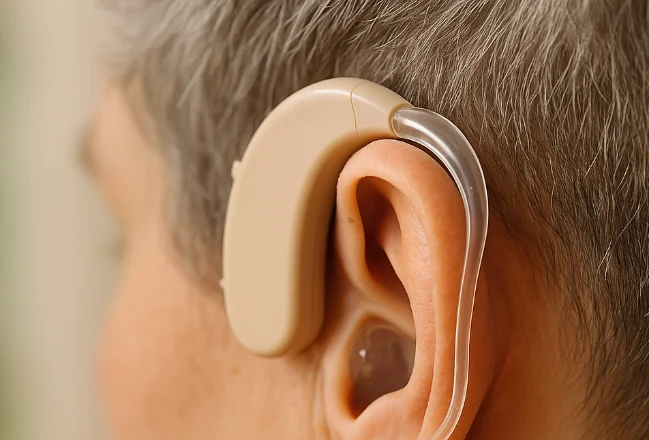
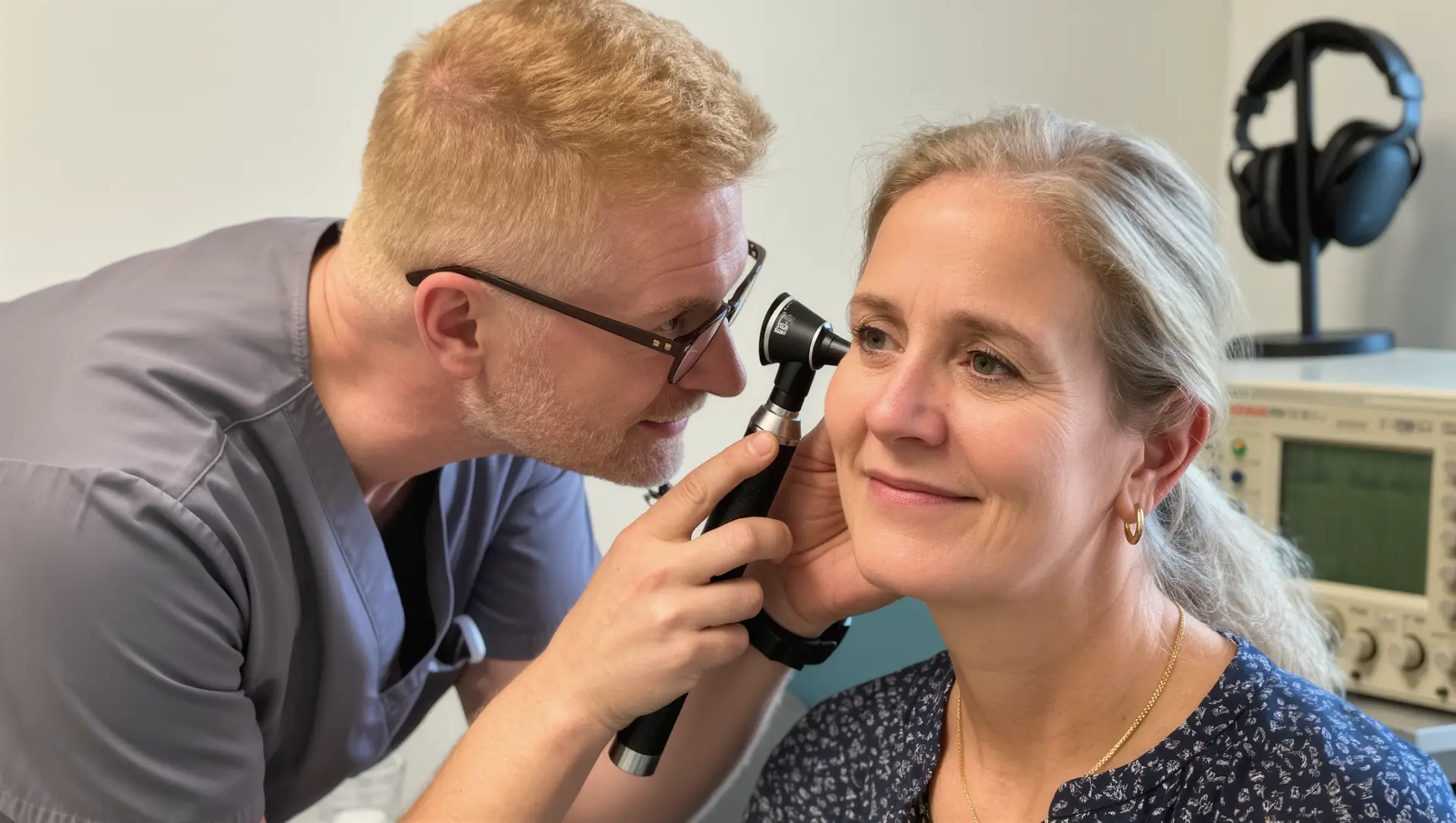
Misophonia is a reduced tolerance to particular sounds, usually everyday human sounds such as chewing, sniffing or breathing. The reaction is automatic, not a choice, and not a matter of being fussy.
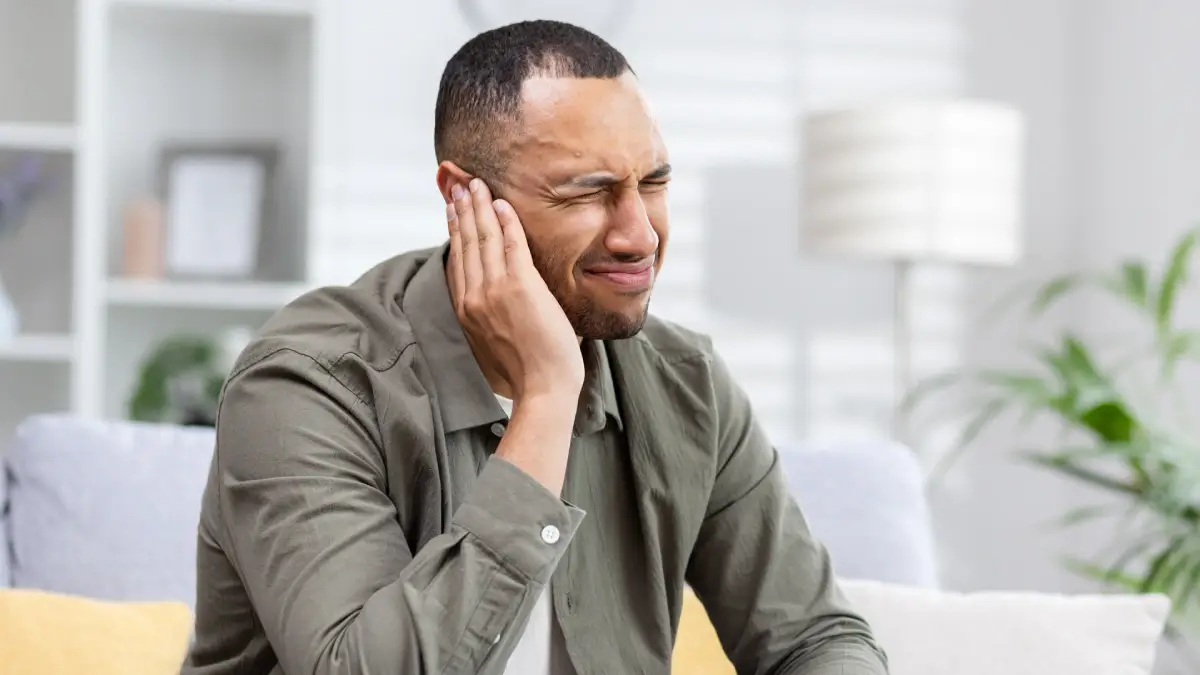
If the sound of someone chewing, sniffing or clicking a pen provokes a reaction far larger than the noise seems to warrant, you are not being difficult. There is a name for it. Misophonia is a recognised problem with sound tolerance, and it tends to land in the field of audiovestibular medicine rather than general practice, because the conditions it sits closest to are hearing ones. It is also frequently confused with hyperacusis, where the problem is loudness, and with tinnitus, where the sound has no external source. Those distinctions matter, because they change who can help.
Key takeaways
- Misophonia is a reduced tolerance to particular sounds, usually everyday human sounds such as chewing, sniffing or breathing. The reaction is automatic, not a choice, and not a matter of being fussy.
- It is common. A King’s College London study of a representative UK sample put the figure at 18.4% of British adults, at a level causing real distress or disruption.
- Most people first notice it in late childhood or the teenage years, often around age 13, and the first triggers are usually made by close family members.
- There is no NHS webpage for misophonia and no NICE guidance, so many GPs are unfamiliar with it. Knowing what to ask for makes a large difference to how quickly you get help.
- Cognitive behavioural therapy has the strongest evidence so far. It does not remove the trigger response, but trials show it can reduce distress and improve daily functioning.
- Misophonia can meet the Equality Act 2010 definition of disability if it has a substantial, long-term effect on your daily life. Where it does, you can ask for reasonable adjustments at work or in education.
What is Misophonia?
Misophonia is a reduced tolerance to certain sounds, and to the sights and settings linked with them. When someone with misophonia hears a trigger sound, the reaction is instant and far bigger than the sound deserves. It might be anger, disgust, panic, or a strong need to get away. Other people in the room often do not notice the sound at all.
Hearing itself is usually normal. What differs is how the brain weighs the sound. The reaction is involuntary, which is the part most often misunderstood, including by the people closest to someone with misophonia. It is not annoyance that can be talked down. The response arrives before any thought about it, in the same way a flinch arrives before you decide to flinch.
An international committee of clinicians and researchers agreed the first formal definition in 2022, describing it as a disorder of decreased tolerance to particular sounds, bringing strong negative emotions, a physical stress response, and distress that most people would not feel at the same sound.
Almost everyone finds some sound unpleasant. The distinction is the size of the reaction and what it costs you. If you are choosing where to sit, who to eat with, or which job to apply for based on the risk of a sound, that is worth discussing with a clinician.
Common misophonia triggers
Trigger sounds are overwhelmingly made by other people, and usually by the mouth, nose or hands. The most commonly reported are:
- Eating sounds: chewing, crunching, slurping, swallowing, cutlery scraping a plate.
- Nasal and breathing sounds: sniffing, snorting, heavy breathing, throat-clearing.
- Repetitive sounds: pen clicking, finger tapping, keyboard typing, foot jiggling.
Two patterns are worth knowing. Almost everyone has their own set of triggers rather than a standard list, and the set tends to grow over the years. And who is making the sound matters enormously: the same chewing that is unbearable from a family member may be tolerable from a stranger, while mechanical sounds such as a washing machine rarely trigger anyone. Many people are also triggered by seeing repetitive movement, even in silence, which is called misokinesia and is a recognised part of the picture.
How common is misophonia in the UK?
More common than almost anyone assumes. In 2023, researchers at King’s College London published the first study of misophonia in a sample designed to represent the UK general population. Their estimate: 18.4% of UK adults have misophonia at a level that causes genuine distress or disruption, close to one in five people. Only a small fraction of them had ever heard the word.
It typically begins in late childhood or early adolescence, with first symptoms around age 13. It can start in adulthood, but that is less common, and a sudden adult onset is worth mentioning to a doctor so other causes can be considered.
What causes Misophonia?
Nobody knows for certain, but misophonia is no longer treated as a psychological quirk. Brain imaging has repeatedly shown that people with misophonia process trigger sounds differently, and the pattern is consistent enough to have produced two serious explanations.
The first is about salience. Trigger sounds produce heightened activity in the anterior insula, the part of the brain that decides which signals deserve attention and links them to emotion. The brain flags the sound as urgent when it should be filtering it out, which is why the response feels like an alarm going off.
The second, from a 2021 study now among the most cited in the field, found unusually strong links between the hearing areas of the brain and the motor areas controlling the face, mouth and throat. Hearing someone chew appears to activate the listener’s own chewing machinery, producing a sense of intrusion. That model explains why triggers are usually sounds a body makes rather than machine noise, and why the identity of the person matters. It also often runs in families: around 28% of people with misophonia report a relative with similar sound sensitivity.
Misophonia, hyperacusis and tinnitus: how they differ
These conditions are frequently confused, including in clinical settings, and getting the distinction right changes which service can help you.
- Misophonia is about the meaning and source of a sound, not its volume. A quiet sniff can be intolerable while loud traffic is fine. The dominant emotions are anger and disgust.
- Hyperacusis is about volume. Ordinary everyday sounds are experienced as uncomfortably or painfully loud, regardless of what is making them.
- Tinnitus is the perception of sound with no external source, usually ringing, buzzing or hissing. It is a generated sound rather than a reaction to one.
If you are unsure which describes you, the useful question is: is the problem how loud it is, or which sound it is and who is making it? Volume points towards hyperacusis. Source points towards misophonia. It is common to see misophonia sitting on top of tinnitus, or alongside a degree of hyperacusis, and each one pulls the plan in a different direction, which is why these are better assessed in one place.
Talk it through with a consultant in audiovestibular medicine
As a consultant in audiovestibular medicine, we can work out in one appointment whether your triggers point to misophonia, hyperacusis or tinnitus, and arrange psychological input within the same clinic rather than at the end of another waiting list. Get in touch to arrange an assessment.
Getting help for misophonia in the UK
Misophonia is not listed as a standalone condition in the DSM-5-TR or ICD-11, and there is no NICE guidance on it. In practice that means no commissioned NHS service in most areas and no guarantee the clinician you see will know the term.
Your GP is still the gateway to every NHS route, and a ten-minute appointment goes further if you bring something concrete: a short list of your triggers, roughly when symptoms started, and two or three clear examples of the impact. Ask for your hearing to be checked and to be considered for a psychological therapy referral.
A hearing assessment is a sensible early step. What it does well is rule things in and out. In a specialist setting, that means a selected handful of tests rather than everything on the menu: pure tone audiometry, tympanometry, acoustic reflex thresholds, and loudness discomfort levels where reduced tolerance needs measuring rather than guessing at. Hearing is usually normal in misophonia, and a normal result is not a dead end. It clears the causes that would otherwise change the plan.
For psychological support, local NHS talking therapies can help with co-occurring anxiety or low mood. The Oxford Health Specialist Psychological Interventions Centre operates as a national service and accepts referrals from outside its area. If you go privately, expect a detailed history, validated questionnaires such as the S-Five, a hearing test where relevant, and a written plan. Check the clinician is on the HCPC or GMC register, and be cautious about anyone promising a cure.
Treatment: what the evidence supports
There is no licensed treatment and no cure. What the research supports is meaningful improvement in distress, reactivity and daily functioning.
Cognitive behavioural therapy adapted for misophonia has the strongest evidence base. It works on the meaning attached to trigger sounds, the physical arousal response, and the avoidance that maintains the problem. It does not try to make you like the sound. The clearest evidence comes from a randomised controlled trial at Amsterdam UMC published in 2021, where symptom scores fell sharply in the treatment group and the gains held a year later.
Sound-based approaches use quiet background sound to soften the contrast between a trigger and silence. The evidence is thinner than for CBT, so it is usually most useful as part of a package rather than on its own. No medicine is licensed in the UK for misophonia. Where medication is prescribed, it is aimed at anxiety or depression rather than the trigger response itself, and that decision belongs with a GP or psychiatrist who knows your full history.
Living with misophonia day to day
Alongside any treatment, the strategies people find most useful tend to be small and unglamorous.
- Use background sound rather than silence. A fan or low music reduces the contrast that makes a trigger stand out.
- Change your position rather than the other person. Sitting further away or facing away often takes the edge off.
- Tell the people close to you what is actually happening. Most partners and parents read the reaction as personal criticism until it is explained.
- Protect sleep and manage stress. Almost everyone reports that tolerance drops when they are tired or under pressure.
Earplugs and noise-cancelling headphones give immediate relief, and there are situations where using them is the sensible choice. There is a catch. Avoidance is what keeps misophonia going, so the more consistently you block out triggers, the more threatening they tend to become. Treat hearing protection as a tool for difficult situations rather than a default state, and check any plan against one question: does this reduce the distress, or only the exposure?
Arrange a consultant-led sound tolerance assessment
Sound sensitivity rarely arrives on its own. I assess hearing, tinnitus and reduced sound tolerance together, exclude the causes that need excluding, and set out a plan you can follow. Get in touch with our team to book a consultation for yourself or your child.
Frequently Asked Questions
Is misophonia a real medical condition?
Yes. Clinicians and researchers recognise it, an agreed international definition was published in 2022, and brain imaging studies show measurable differences in how trigger sounds are processed. It is not yet listed as a standalone diagnosis in the DSM-5-TR or ICD-11, which affects how it is recorded rather than whether it is real.
Is there a test for misophonia?
There is no single diagnostic test. Assessment uses validated questionnaires, mainly the S-Five and the Amsterdam Misophonia Scale, alongside a structured clinical history. Hearing tests are used to rule out other causes rather than to confirm misophonia, because hearing is usually normal.
What happens at a misophonia assessment?
It begins with a detailed conversation: which sounds trigger you, when it started, how the set has grown, and what you have stopped doing because of it. Validated questionnaires are usually completed alongside that, and a hearing assessment is commonly included to identify any hyperacusis or tinnitus sitting underneath. You should leave with a written explanation of the findings and an agreed plan.
Can misophonia be cured?
There is no cure and no licensed treatment. Cognitive behavioural therapy adapted for misophonia has been shown in controlled trials to reduce symptom severity and improve daily functioning, with gains maintained at one-year follow-up. The realistic goal is reducing distress and reclaiming the situations you have been avoiding.
Can I get help for misophonia on the NHS?
Yes, though there is no dedicated pathway in most areas. Start with your GP, who can arrange a hearing assessment to exclude other causes and refer you to psychological services. The Oxford Health Specialist Psychological Interventions Centre operates as a national NHS service and accepts referrals from outside its area.
References
- Swedo SE et al. Consensus Definition of Misophonia: A Delphi Study. Frontiers in Neuroscience, 2022 – https://www.frontiersin.org/journals/neuroscience/articles/10.3389/fnins.2022.841816/full
- Vitoratou S et al. Misophonia in the UK: prevalence and norms from the S-Five in a UK representative sample. PLOS ONE, 2023 – https://journals.plos.org/plosone/article?id=10.1371/journal.pone.0282777
- Kumar S et al. The Motor Basis for Misophonia. Journal of Neuroscience, 2021 – https://pmc.ncbi.nlm.nih.gov/articles/PMC8244967/
- Jager IJ et al. Cognitive behavioral therapy for misophonia: a randomized clinical trial. Depression and Anxiety, 2021 – https://onlinelibrary.wiley.com/doi/abs/10.1002/da.23127