
Vestibular physiotherapy in Borehamwood at our new Elstree clinic. Here is what happens at your first appointment and how treatment is planned.

Have you been referred for vestibular physiotherapy in Borehamwood, or considering it? It helps to know what’s involved and where to go locally. Harley Street Audiovestibular Clinic now runs a dedicated vestibular and balance therapy clinic in Elstree, Borehamwood, so specialist care no longer means a trip into central London for every appointment.
Vestibular physiotherapy is a specialist, exercise-based treatment for dizziness, vertigo and balance problems caused by the inner ear or its link to the brain. It helps people with BPPV, vestibular neuritis, Meniere’s disease, and vestibular migraine, as well as unsteadiness left over after an illness or injury. At your first appointment, your physiotherapist asks detailed questions, runs specific tests, then builds a plan around exactly what they find.
Key takeaways
- Vestibular physiotherapy is a specialist, exercise-based treatment for dizziness, vertigo, and balance problems caused by the inner ear or its link to the brain.
- Your first appointment includes a detailed history and real physical tests, such as checking your eye movements and testing specific head positions, not just a general chat.
- Treatment is built around your specific diagnosis. There is no single vestibular exercise programme that suits everyone.
- Feeling briefly dizzy during some exercises is normal and expected. It does not mean treatment is doing you harm.
- Sudden, severe dizziness with slurred speech, facial weakness, or double vision needs urgent medical care first, not a physiotherapy appointment.
What Is Vestibular Physiotherapy?
Vestibular physiotherapy is a specialist branch of physiotherapy that treats problems with your vestibular system, the part of your inner ear that controls balance. Fluid-filled canals deep inside each ear sense movement and head position, sending this to your brain, where it is combined with what your eyes see and your body feels, keeping you steady while you move.
When one part of this system sends the wrong signal, your brain gets a mismatch. Your inner ear reports one thing; your eyes and body report another. That mismatch produces the spinning, swaying or unsteady feeling most people call dizziness, vertigo or imbalance.
This differs from general physiotherapy, which treats muscles, joints and movement, such as back pain or a sports injury. A vestibular physiotherapist has extra training to assess the inner ear, eye movements and balance; not every physiotherapist offers this service.
Vestibular rehabilitation is exercise-based rather than reliant on medication alone. Some exercises correct the problem directly, such as moving displaced particles back into place; others help your brain adapt to a real change in how your inner ear works.
Who Can Benefit From Vestibular Rehabilitation in Borehamwood?
Vestibular rehabilitation can help with several different conditions. Not every cause of dizziness is vestibular, so getting an accurate diagnosis matters more than starting a generic set of exercises.
Vertigo and dizziness
General vertigo and dizziness, whether it comes and goes or stays constant, is the most common reason people are referred for vestibular physiotherapy. An assessment works out exactly what is causing it before any treatment starts.
BPPV
Benign paroxysmal positional vertigo happens when tiny calcium crystals come loose inside the inner ear and drift into a balance canal, triggering short, intense spinning with head movements such as rolling over in bed. It usually responds very well to a specific repositioning treatment.
Balance and unsteadiness
Ongoing unsteadiness, without necessarily a spinning sensation, can still respond well to vestibular rehabilitation, particularly balance retraining exercises that rebuild confidence in standing and walking.
Vestibular neuritis and labyrinthitis
These involve inflammation of the vestibular nerve or inner ear, usually after a viral infection, causing sudden, severe dizziness for several days, with weeks of unsteadiness as the brain adjusts. Physiotherapy speeds up that adjustment.
Vestibular migraine
This common but often missed cause of recurring dizziness does not always come with a headache. This may respond to a longer course of gentle physiotherapy alongside migraine management, since its triggers tend to be more complex than a straightforward problem like BPPV.
Ongoing dizziness or imbalance after illness or injury
Some people are left with lingering dizziness after a virus, a head injury or a long illness, as are older adults regaining confidence after a fall. A treatable inner ear cause is common here and often overlooked; vestibular rehabilitation can rebuild both function and confidence, alongside any other care you are already receiving.
What Happens During Your First Vestibular Physiotherapy Appointment?
This is usually the part people are most curious, or most nervous, about. Here is what it actually involves, step by step.
1. Discussing your symptoms and medical history
Your physiotherapist will ask a series of detailed questions before any physical testing begins.
- When your symptoms started
- What the dizziness actually feels like
- What seems to trigger it
- How long each episode lasts
- How often it happens
- Whether you have had any falls
- Any hearing symptoms, such as tinnitus or muffled hearing
- Whether you get headaches or migraines
- How your symptoms are affecting your everyday activities, including work and driving
2. Assessing your balance and movement
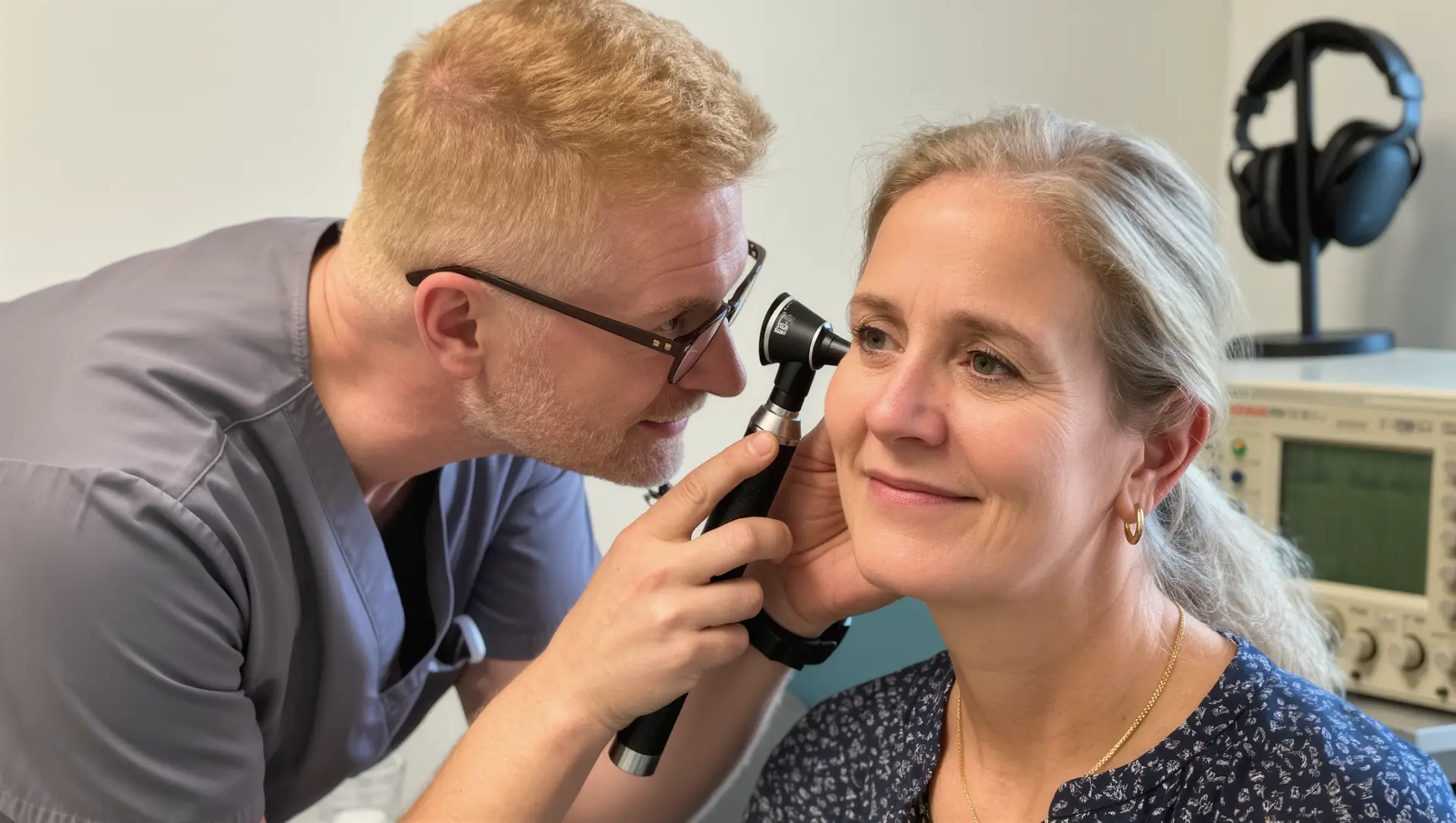
Your physiotherapist watches how you stand and walk, sometimes with your eyes closed or on a soft surface, to see how much you rely on your inner ear compared with your eyes and body. They also check how steady your gaze stays as your head moves and how well your eyes track a moving target, which shows how your inner ear and eye muscles work together.
If BPPV is suspected, they also use the Dix-Hallpike test: you are guided into a lying position with your head turned and tipped back, while your physiotherapist watches your eyes for a pattern of movement that confirms which part of the inner ear is affected. Recreating the problem this way often tells them far more than a description alone.
3. Identifying the likely cause
Your history and test results point towards a likely cause, whether that is BPPV, a general drop in inner ear function (vestibular hypofunction), migraine-related dizziness, or something else. If the picture is not clear, you may be referred for further testing, usually arranged alongside an audiovestibular physician.
4. Creating your personalised treatment plan
There is no single vestibular exercise programme that works for everyone. A plan built for BPPV looks very different from one built for vestibular migraine, and the wrong exercise for your condition can be unhelpful or even unpleasant, which is why the assessment always comes first.
Ready to Find Out What Is Causing Your Dizziness?
If this sounds like the kind of assessment you have been waiting for, it is exactly how we work at our Elstree clinic. You do not need a GP referral, most enquiries get a reply within one working day, and we can usually offer an assessment within two weeks. If your symptoms need urgent attention, we will tell you that rather than book you in.
What Treatments Might Be Used?
Your treatment plan will usually combine more than one of the following, chosen for your specific diagnosis.
- Gaze stabilisation exercises, which help with visual stability during head movement.
- Balance exercises, which help with unsteadiness and rebuilding balance confidence.
- Walking exercises, which help with mobility and balance while moving.
- Habituation exercises, which help with dizziness triggered by specific movements or positions.
- Repositioning manoeuvres, such as the Epley manoeuvre, which help with certain forms of BPPV.
- Home exercises, which continue your rehabilitation between clinic sessions.
- Education and self-management advice, which helps you understand and manage your symptoms day to day.
Can Vestibular Exercises Make You Feel Dizzy?
Yes, and this is expected. Some exercises bring on a controlled level of symptoms, which is how your brain learns to stop overreacting to the signals it gets. Feeling briefly dizzy afterwards does not mean the treatment is harming you.
Exercises should always suit your specific condition, never a generic set applied regardless of diagnosis. Safety matters too if falls are a concern, so balance-challenging exercises should be introduced carefully. Follow your physiotherapist’s instructions, and tell them if anything feels far worse than expected.
How Many Vestibular Physiotherapy Sessions Will You Need?
There is no fixed number that applies to everyone, and it is worth being wary of anyone who promises one before they have assessed you. How many sessions you need depends on:
- The severity of your symptoms
- The underlying condition causing them
- How long you have had symptoms
- How you respond to the exercises you are given
- How consistently you keep up your home programme
- Your own goals for treatment
Some people need only one or two appointments, common with a straightforward case of BPPV. Others need a longer course with regular reviews, more likely with a persistent problem such as vestibular migraine. Your physiotherapist should be clear at each review about your progress and whether further sessions are likely to help.
What Can You Do Between Vestibular Physiotherapy Appointments?
What you do between sessions matters as much as what happens in the clinic.
- Complete your prescribed exercises as often as advised, usually a few minutes, two or three times a day.
- Return to your normal activities gradually as your confidence and symptoms allow, rather than pushing too hard too soon.
- Keep a brief symptom diary, noting when dizziness happens and what seems to trigger it, since this helps your physiotherapist adjust your plan.
- Follow any safety advice you have been given, particularly around fall prevention if balance is a concern.
- Avoid restricting your movement more than necessary. Vestibular rehabilitation works because it gently challenges the system, and avoiding all movement that provokes symptoms can slow your progress.
- Contact your physiotherapist if your symptoms change significantly, rather than waiting until your next appointment.
Vestibular Physiotherapy vs General Physiotherapy
The two are related but distinct, and it helps to know the difference before you book.
- General physiotherapy treats musculoskeletal problems such as back, neck, or joint pain. Vestibular physiotherapy treats dizziness, vertigo, and other vestibular disorders.
- General physiotherapy focuses on strength and mobility. Vestibular physiotherapy focuses on balance and vestibular function.
- General physiotherapy assesses joints and muscles. Vestibular physiotherapy assesses eye movements, head movements, and balance.
- General physiotherapy uses exercise-based rehabilitation for movement and function. Vestibular physiotherapy uses vestibular-specific exercises such as gaze stabilisation and repositioning manoeuvres.
- General physiotherapy typically addresses pain and physical function. Vestibular physiotherapy addresses vertigo, dizziness, balance, and the function built on top of them.
When Should You Seek Help for Vertigo or Balance Problems?
It is worth booking a vestibular assessment if you notice any of the following:
- Vertigo that keeps coming back
- Dizziness that persists rather than settling
- Unexplained unsteadiness or imbalance
- Falls, or a growing fear of falling
- Dizziness triggered by moving or turning your head
- Symptoms affecting your work, driving, or daily life
- Symptoms that are not improving on their own
These are common and usually point to a treatable inner-ear cause rather than anything more serious. An assessment is how you find out which.
Why Choose Vestibular Physiotherapy in Borehamwood?
Borehamwood and Elstree do have general physiotherapy practices locally, and for a straightforward, already-diagnosed case of BPPV, a local generalist clinic can work well. Specialist care tends to help more when the diagnosis is unclear, or symptoms are complex.
A dedicated audiovestibular clinic offers a different level of support. At our Elstree clinic, physiotherapists work under the clinical governance of our Clinical Director, alongside the audiovestibular physicians and audiologists based at Harley Street. If you need detailed testing, such as video head impulse testing or a full hearing assessment, that happens at Harley Street on the same clinical record, so you do not need a separate referral or to repeat your history.
What you should expect from a specialist vestibular physiotherapist, wherever you choose to be treated:
- HCPC registration and specific postgraduate training in vestibular rehabilitation, not general physiotherapy alone
- A thorough, personalised assessment before any treatment starts
- A treatment plan built around your specific diagnosis, with a clear individual home exercise plan
- Access to audiovestibular physicians or ENT specialists if your case needs further investigation
- Clear, honest communication about how many sessions you are likely to need and how your progress is being measured
Elstree and Borehamwood station runs direct Thameslink services into London St Pancras and Farringdon, both well under 30 minutes each way, making a specialist assessment a manageable trip even for a single appointment. Fees and insurance recognition vary by clinic, so confirm these when you enquire or book.
Book Your Vestibular Physiotherapy Assessment in Elstree, Borehamwood
Dizziness and unsteadiness rarely settle by chance, and an accurate diagnosis makes it far easier to know which exercises will actually help. Our Elstree, Borehamwood clinic is run by Harley Street Audiovestibular Clinic, a consultant-led practice for hearing, tinnitus, dizziness and balance disorders. If your case needs a fuller assessment or further testing, that referral happens on the same clinical record, so you will not need to repeat your history from scratch. Self-referral is welcome, most major insurers are accepted, and Elstree and Borehamwood station is under 30 minutes from St Pancras and Farringdon by direct Thameslink service.
Frequently asked questions
What does vestibular physiotherapy involve?
It involves a detailed assessment of your symptoms, balance, and eye movements, followed by a treatment plan built around your specific diagnosis. This might include repositioning manoeuvres, gaze stabilisation exercises, balance training, or a combination of these.
Can physiotherapy help vertigo?
Yes, for many causes of vertigo, particularly BPPV, vestibular physiotherapy is a well-established and effective treatment, often resolving symptoms in one or two sessions.
What happens at a vestibular physiotherapy assessment?
Your physiotherapist takes a detailed history, then carries out physical tests, including checking your eye movements, watching your balance and walking, and sometimes a specific positional test such as the Dix-Hallpike test to check for BPPV.
Is vestibular rehabilitation suitable for BPPV?
Yes, BPPV usually responds very well to a specific repositioning manoeuvre, most commonly the Epley manoeuvre, often within one or two sessions.
Can vestibular exercises make dizziness worse?
Some exercises are designed to bring on mild, controlled dizziness as part of how the brain adapts. This is expected and is not the same as the exercises being harmful, provided they are appropriate to your diagnosis and progressed carefully.
How long does vestibular rehabilitation take?
It depends on the cause. BPPV often resolves in one or two sessions. Conditions such as vestibular neuritis or vestibular migraine typically need a longer course, often several weeks, with regular home exercise in between.
Do I need a GP referral for vestibular physiotherapy in Borehamwood?
No. Our Elstree clinic accepts self-referral, so you can book directly without seeing your GP first. On the NHS, you usually need a referral from your GP, but a referral letter is useful rather than required if you already have one, particularly where there is a history of ear surgery or neurological symptoms.
Can vestibular physiotherapy help balance problems?
Yes, balance retraining exercises are a core part of vestibular rehabilitation and can help with unsteadiness, falls risk, and confidence in walking, whether or not spinning vertigo is also present.
Will I be given exercises to do at home?
Almost always. Home exercises, practised for a few minutes several times a day, are usually what drives most of the real progress between clinic appointments.
Is vestibular physiotherapy painful?
No, it is not painful. Some tests and exercises can briefly bring on dizziness, which is expected, but it should not cause physical pain.