BPPV often returns. A UK hospital study found recurrence in roughly a third to over half of patients, depending on how long they were followed up.
Key takeaways
- BPPV often returns. A UK hospital study found recurrence in roughly a third to over half of patients, depending on how long they were followed up.
- One in five recurrences involve a different inner ear canal to the one treated before. This is why the same self-treatment does not always work twice.
- A specialist assessment identifies which canal is affected this time. Posterior, horizontal and anterior canal BPPV each need a different manoeuvre.
- A 2023 trial found patients who used a tool to re-diagnose which canal was affected in their current episode had significantly better resolution than those who just repeated their previous treatment
- Some dizziness is not BPPV at all. Sudden hearing loss, a new severe headache, or neurological symptoms need urgent medical review, not physiotherapy.
Why Does BPPV Keep Coming Back?
You treated your BPPV. You felt better. Then, months later, the room starts spinning again the moment you roll over in bed.
If that is where you are right now, you are not imagining it, and you have not gone back to square one – a new episode is not automatically the same as the last one.
This is for anyone in Borehamwood, Elstree, Radlett, Bushey or the wider Hertfordshire and North London area dealing with BPPV that keeps coming back, covering why recurrence happens and how vestibular physiotherapy in Borehamwood can help.
What causes BPPV in the first place?
Your balance depends on tiny crystals staying in place inside your inner ear’s semicircular canals. In BPPV, some come loose and drift into a canal, most often the posterior one, sending a false spinning signal to your brain when you move your head into certain positions, such as rolling over in bed. No clear trigger is found for most first episodes, though head injury, prolonged bed rest, an ear infection or migraine can be factors.
Is recurrent BPPV common?
Yes, and there is good evidence for this rather than a vague estimate. A study of 664 patients treated at a London teaching hospital’s vestibular physiotherapy service found a recurrence rate of 34 per cent among patients followed up for at least one year, rising to 41 per cent at one to two years, and 53 per cent at two years or more. Overall, close to half the group experienced a recurrence at some point, and this rose to 58 per cent among those with a confirmed, rather than probable, BPPV diagnosis.
These findings describe a patient group, not a personal prediction – but one detail is worth knowing: one in five recurrences involved a different semicircular canal from the one treated the first time, a new problem rather than the old one failing to respond.
Does Recurrent BPPV Mean the First Treatment Didn’t Work?
No, not usually. This is one of the most common worries people bring to a follow-up appointment.
Successful treatment resolves the crystals causing your current episode, not future ones – which is why specialist follow-up, not just repeat treatment, is what recurrence actually needs.
A few things can look identical from the outside, but mean different things clinically:
- Recurrence is not treatment failure. A new episode after the first resolved, versus the first never fully resolving.
- Residual dizziness is not active BPPV. Mild unsteadiness for a day or two is normal; full vertigo weeks later is usually a new episode.
- A new episode may involve a different canal. This happens in around one in five recurrences, so the same self-treatment may not work again.
- Repeating an old manoeuvre from memory is not reassessment. Without checking the affected canal and side this time, you may apply the wrong manoeuvre.
How Is Recurrent BPPV Assessed?
Dix-Hallpike testing
The Dix-Hallpike test is the standard way to confirm posterior or anterior canal BPPV. A trained clinician moves you through a specific change in head and body position, briefly reproducing the vertigo along with a telltale eye movement pattern that confirms the diagnosis and shows which side is affected. This should never be attempted on yourself or a partner, given the risks for anyone with neck or circulation problems. Horizontal canal BPPV is instead confirmed with a similar test, the supine roll test.
Checking the affected side and canal
This detail gets left out of most descriptions of BPPV, but it matters for recurrence. About nine in ten cases affect the posterior canal; the horizontal and, more rarely, anterior canals can also be involved. Each type needs a different manoeuvre, so using the wrong one will not work, even though it can look like the old BPPV returning. A specialist vestibular physiotherapist reads these patterns, picks the right manoeuvre, and retests afterwards to confirm the crystals have actually moved.
When it might not be BPPV
Vestibular migraine, Meniere’s disease, vestibular neuritis and persistent postural-perceptual dizziness (PPPD) can all cause dizziness labelled ‘recurring BPPV’, particularly where episodes last longer than a minute, come with hearing changes, or have no clear positional trigger.
NHS guidance is clear that dizziness which keeps returning should be reviewed by a doctor rather than assumed. This holds even if you have already had scans or blood tests elsewhere and been told everything was normal: a clear scan does not rule out a vestibular problem, since these conditions are usually diagnosed from history and examination rather than imaging.
Book a vestibular physiotherapy assessment
If any of the above sounds familiar, a specialist assessment at Harley AVM's Borehamwood and Elstree clinic can confirm which canal is affected this time and treat it in the same visit. Contact the team to arrange an appointment.
What Does Vestibular Physiotherapy for BPPV Involve?
Assessment
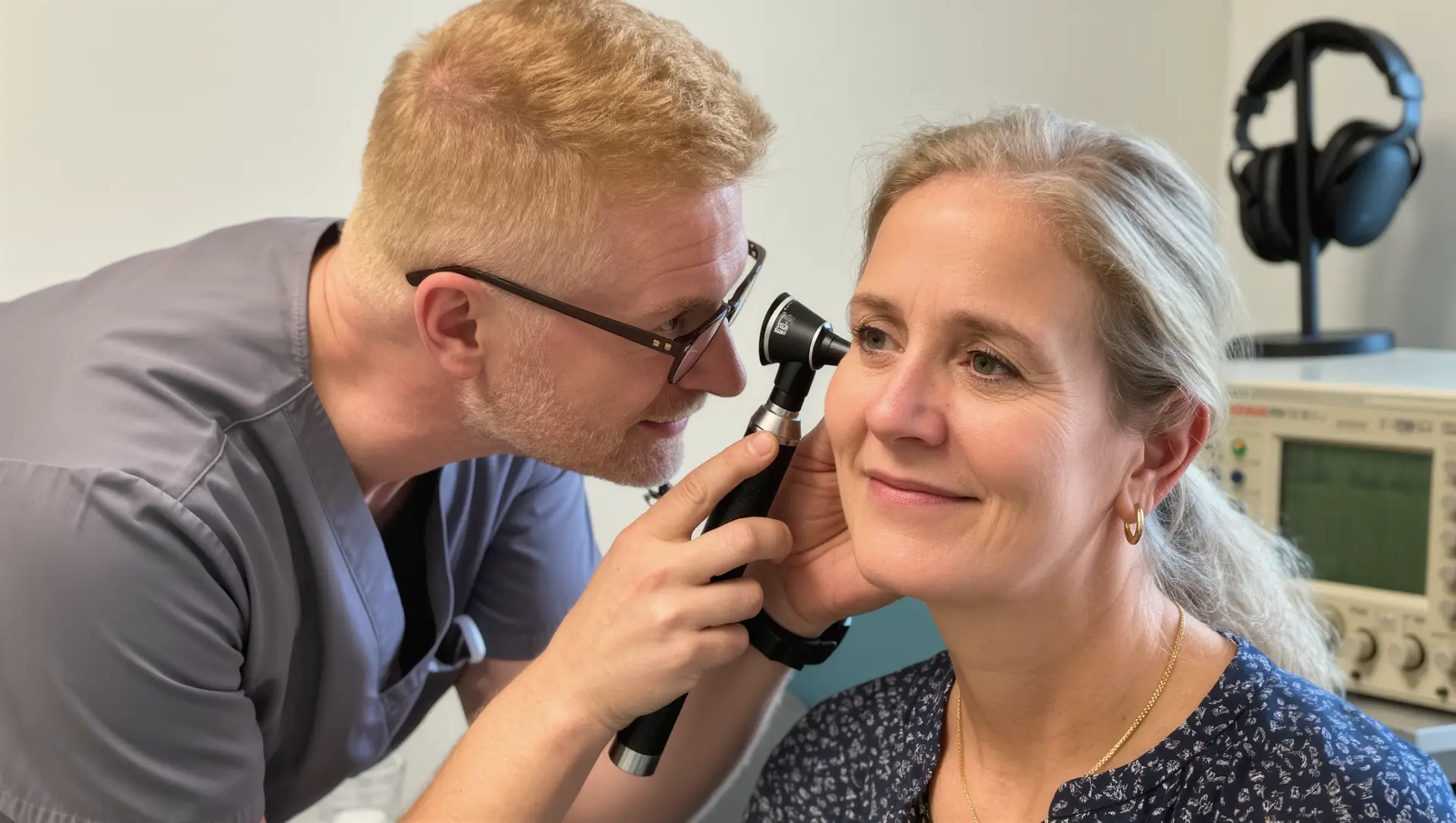
A first visit starts with a detailed history, followed by positional testing that confirms the diagnosis and identifies the affected canal. At the Borehamwood clinic, this usually takes around an hour; it is worth bringing a list of any medicines you take, copies of previous results, and flat shoes, since part of the visit involves walking and balance testing too. Treatment typically follows in the same appointment once BPPV is confirmed.
Repositioning manoeuvres
For posterior canal BPPV, the Epley manoeuvre, or canalith repositioning, is standard: a series of head and body positions, each held for around 30 seconds, using gravity to move the crystals back out of the canal. The Semont manoeuvre suits people whose neck or back mobility makes the Epley positions difficult. These should only ever be carried out by a trained professional, since certain conditions make it unsuitable and incorrect technique carries risk. Horizontal canal BPPV needs a different sequence, most often the barbecue roll, since the right manoeuvre depends on which canal and side is affected.
What happens after the manoeuvre?
Most people feel a brief, strong spin during the manoeuvre, settling within a minute or two, and positional spinning often improves immediately. Some short-term imbalance is common for a day or so afterwards, so arrange a lift home and take things gently. Your physiotherapist may add a short home exercise plan, such as gaze stabilisation and Brandt-Daroff habituation exercises, if you feel unsteady in general. If symptoms have not settled within a few days, a follow-up appointment allows the assessment to be repeated rather than the manoeuvre simply tried again.
When Should You Consider BPPV Treatment in Borehamwood?
A few patterns tend to mean an assessment is worth booking, rather than waiting to see what happens:
- You keep getting spinning when rolling over in bed – the classic positional pattern of BPPV, worth assessing properly.
- Your symptoms have come back after previous treatment – the current episode may need its own reassessment.
- You have tried the Epley manoeuvre yourself, but symptoms remain – the diagnosis or canal may need checking.
- You still feel off-balance after the spinning has settled – often helped with a short exercise programme.
- You are avoiding movement for fear of another attack – rehabilitation can help rebuild confidence.
None of this guarantees physiotherapy will prevent every future recurrence, but it gets the current episode properly identified and treated. Most enquiries get a reply within one working day, with an assessment usually arranged within two weeks – and if anything needs more urgent attention, the team will say so rather than simply booking you in.
Can Vestibular Physiotherapy Prevent BPPV From Coming Back?
Not entirely, and it would be misleading to claim otherwise. Recurrence happens because fresh crystals become dislodged, not from anything left undone earlier – what changes the odds is managing the factors within your control.
Generic advice such as extra pillows or avoiding sudden head movements is not wrong, but it treats every case the same, when research shows recurrence risk clusters around specific, checkable factors:
- A review of over 13,000 patients across 30 studies found the highest recurrence rates among those with high cholesterol (68 per cent) and high blood pressure (56 per cent), with roughly half of those with diabetes also affected.
- Migraine, reduced bone density, low vitamin D, and older age are also consistently linked to a higher chance of recurrence.
None of this means BPPV is a symptom of these conditions – reviewing them with your GP alongside your BPPV care is a genuinely evidence-based step.
BPPV Physiotherapy in Borehamwood: What Can You Expect?
Harley AVM’s testing and diagnosis happen at the Harley Street clinic in central London, on one clinical record led by the consultant. For patients in Borehamwood, Elstree and the wider Hertfordshire area, treatment happens locally instead, at Harley AVM Vestibular and Balance Therapy, Centennial Park, Centennial Avenue, Elstree, Borehamwood, Hertfordshire WD6 3FG.
In practice, a Borehamwood-based patient gets both: the diagnostic work sits with the consultant-led Harley Street clinic, confirming which canal is involved where unclear, while the physiotherapy happens close to home in Elstree. If your reassessment points elsewhere, your physiotherapist will say so and arrange the right referral.
Vestibular physiotherapy at the Borehamwood and Elstree site is not limited to BPPV – it also covers wider balance and dizziness rehabilitation, including vestibular neuritis and PPPD, for patients whose diagnosis is already established at Harley Street.
Could Vestibular Physiotherapy in Borehamwood Help Your Recurrent BPPV?
If BPPV keeps coming back, the aim is not to repeat the same manoeuvre and hope it holds this time. It is to work through it properly, in four steps:
- Recognise that a repeat episode is common and does not mean anything went wrong before.
- Assess which canal and side are affected this time, since it may differ from last time.
- Treat with the manoeuvre that matches what the assessment finds.
- Reassess if symptoms persist or return, rather than repeating the same self-treatment on faith.
If this sounds like where you are right now, a specialist assessment is the direct next step. Mention any previous diagnosis when you book, so your physiotherapist can move straight to confirming whether this involves the same canal or a different one.
Get in touch
Contact Harley AVM's Borehamwood and Elstree clinic to arrange a vestibular physiotherapy assessment. Recent patient feedback for the clinic is visible on our Google Business Profile, if you would like to see how other appointments have gone.
Frequently Asked Questions
Can BPPV come back after the Epley manoeuvre?
Yes. A UK hospital study of 664 patients found recurrence in roughly a third to over half of patients, depending on how long they were followed up, and in 58 per cent of those with a confirmed diagnosis. Recurrence is a normal feature of the condition, not a sign the manoeuvre failed.
Why does my BPPV keep returning?
Successful treatment clears the crystals causing your current episode, but it does not stop a fresh batch from becoming dislodged later. Certain factors, including migraine, older age, reduced bone density and low vitamin D, are linked to a higher chance of this happening.
Can recurrent BPPV affect a different ear or canal?
Yes. Research from a London hospital’s vestibular physiotherapy service found that one in five recurrences involved a different semicircular canal to the one treated the first time. This is one reason a repeat episode needs its own assessment, rather than assuming it is identical to the last one.
Can physiotherapy treat recurrent BPPV?
Yes. A specialist vestibular physiotherapist can reassess which canal and side are affected this time and apply the matching repositioning manoeuvre, in the same way as for a first episode.
Is vestibular physiotherapy different from normal physiotherapy?
Yes. Vestibular physiotherapy is a specialist field focused on the inner ear’s balance system, including positional testing and repositioning manoeuvres for BPPV. General physiotherapy typically focuses on muscles, joints and movement rather than the vestibular system.
Do I need a GP referral for BPPV treatment in Borehamwood?
Not for a private appointment. You can book directly with Harley AVM’s Borehamwood and Elstree clinic. A referral letter is helpful if you have had previous ear surgery or neurological symptoms, but it is not required. An NHS referral is only needed if you want to access vestibular physiotherapy through the NHS route.
How many physiotherapy sessions are needed for BPPV?
Most people need one to three sessions to resolve a single BPPV episode. Ongoing balance exercises may extend this if you have had symptoms for a long time, or have a broader vestibular condition alongside BPPV.
When should dizziness be checked by a doctor?
Seek urgent medical assessment if dizziness is constant rather than triggered by movement, or comes with sudden hearing loss, a severe new headache, slurred speech, facial weakness, double vision or difficulty walking. These point to a cause other than BPPV.