
This guide walks through what the test involves, why a clinician uses it, what you are likely to feel, and what your result means. It also explains how a positive result connects to a common inner ear problem called BPPV and the treatment that usually follows.
Brief, spinning dizziness or vertigo when you roll over in bed or when you move your head, tip your head back or bend down can be alarming, and it sends many people searching for an explanation. If that sounds like you, your clinician may suggest a Dix-Hallpike test. It is a quick movement test, carried out in the clinic, that helps find the cause of short bursts of vertigo. You stay awake throughout, and nothing is injected or swallowed.
This guide walks through what the test involves, why a clinician uses it, what you are likely to feel, and what your result means. It also explains how a positive result connects to a common inner ear problem called BPPV and the treatment that usually follows.
What is the Dix-Hallpike test?
The Dix-Hallpike test is a positional test used to diagnose benign paroxysmal positional vertigo (BPPV). Your clinician moves you from sitting to lying down with your head turned to one side, then watches your eyes for a brief, specific flicker called nystagmus. If that movement sets off short-lived vertigo together with nystagmus, the result points to BPPV in one of the balance canals of your inner ear1.
It takes its name from the two London-based doctors who first described it, Dr Margaret Dix and Mr Charles Hallpike. You may also see it written as the Dix-Hallpike manoeuvre or the Hallpike manoeuvre. It is still the standard first-line check for the most common form of BPPV2.
Why does a clinician perform the Dix-Hallpike test?
Dizziness has many possible causes, so your clinician needs to narrow them down. The Dix-Hallpike test answers one important question: Are your symptoms triggered by a change in head position, in the pattern typical of BPPV?
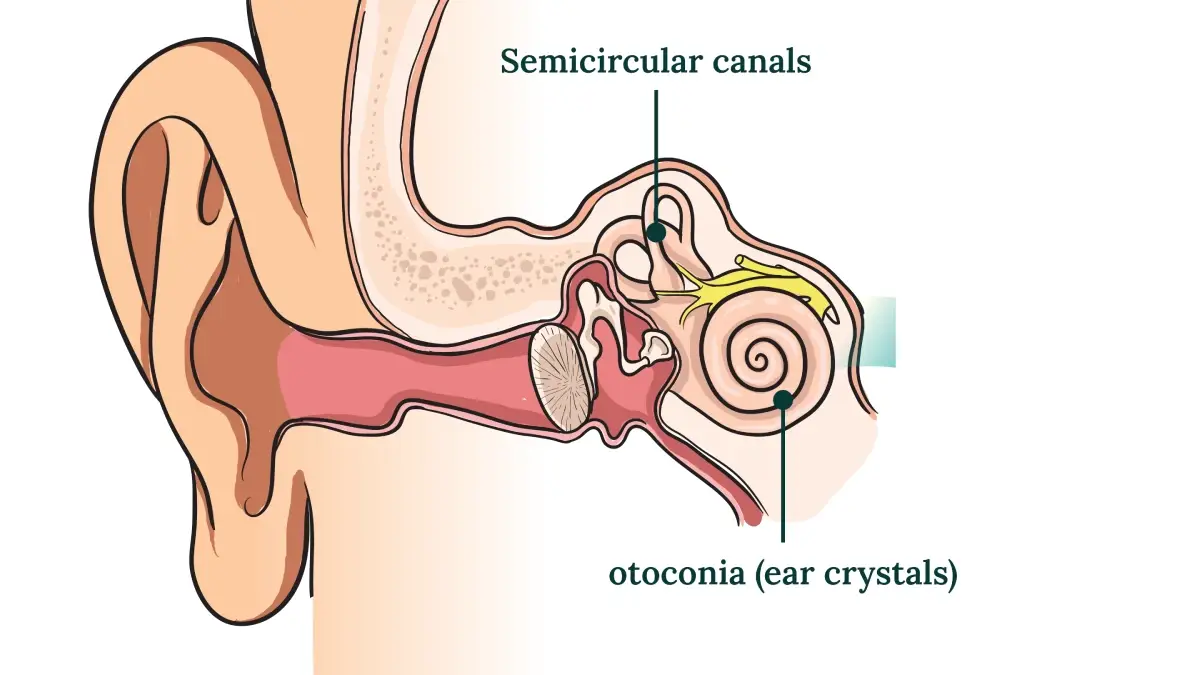
BPPV develops when tiny calcium crystals in the inner ear, known as otoconia, slip out of place into one of the fluid-filled balance canals. When you move your head, the loose crystals shift and send a false signal that you are spinning3. The test recreates that trigger in a controlled way, so your clinician can see exactly what happens.
It also helps work out which ear and which canal are affected. That detail matters because it guides the precise treatment that follows. The test can also help confirm or rule out BPPV before other causes of dizziness are considered.
What to expect during the test
The test is quick, usually only a few minutes. Your clinician will ask about your symptoms first and talk you through each step before anything happens.
In the clinic, the worry people raise most often beforehand is whether the movement will make the dizziness worse. If you have BPPV, it can briefly do exactly that, and that response is precisely what helps with the diagnosis. It settles within a minute once you are still.
Before the test
Tell your clinician if you have any neck, back or shoulder problems, or any heart or circulation concerns, as the position may need to be adapted. Mention contact lenses or eye makeup, too, because clear eyes make the response easier to see. If you take medicine for dizziness, ask whether to pause it beforehand.
The movements
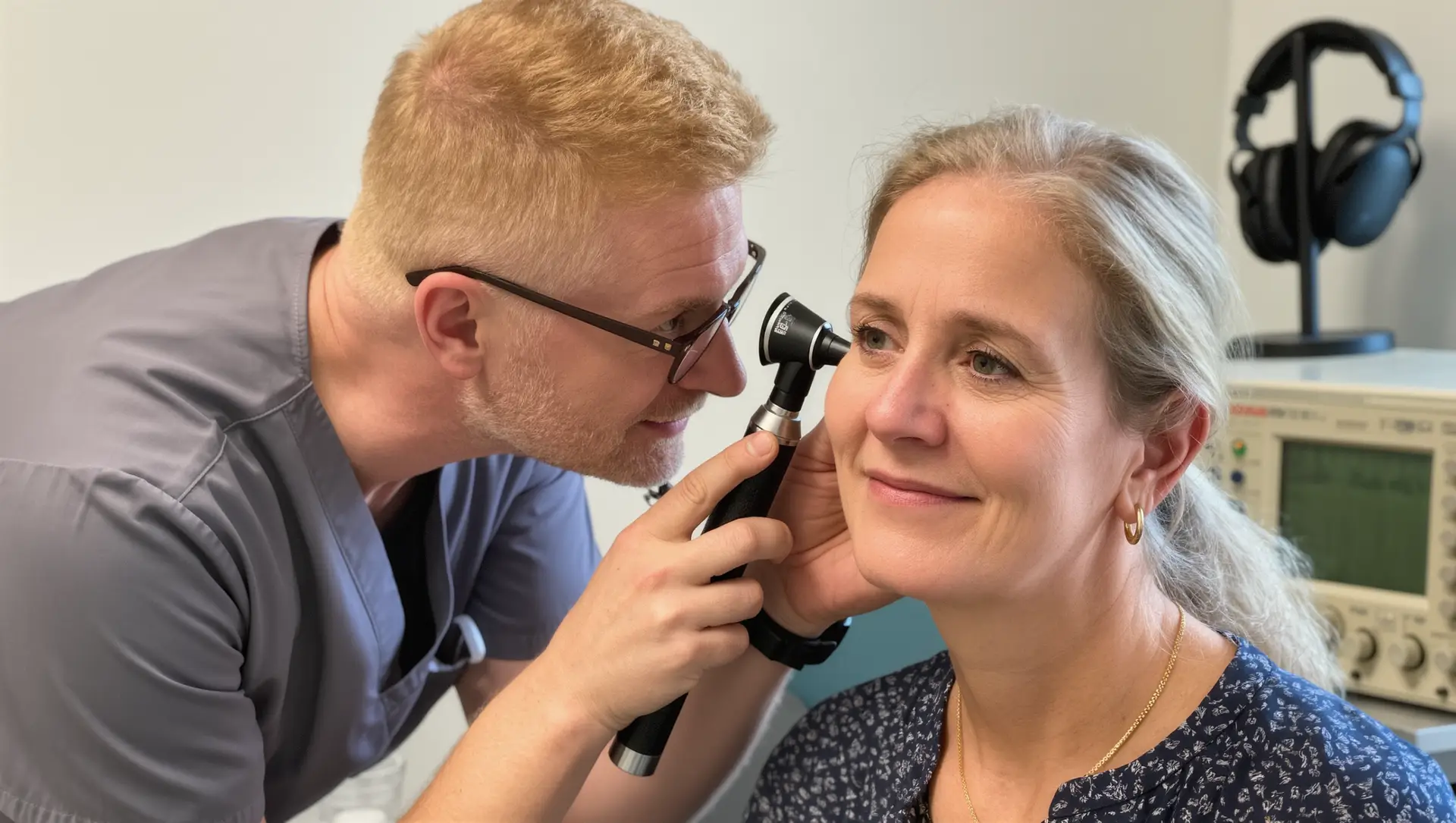
Your clinician will guide you through a short sequence. At Harley Street Audiovestibular Clinic, our clinicians tend to make use of eye recording devices such as video frenzels during the examination.
- You sit upright on an examination couch.
- They turn your head about 45 degrees to one side.
- They help you lie back quickly, so your head extends slightly over the edge of the couch.
- You keep your eyes open while they watch them for around 30 seconds.
- They bring you back up to sitting and may repeat the steps with your head turned the other way.
How long does it take, and how does it feel
If you have BPPV, lying back may set off a short burst of spinning that feels strong but eases within a minute. This is expected, and it shows the test is doing its job. The sensation can be unpleasant, and some people feel briefly sick, but it passes quickly once you are still and settled.
What the clinician is looking for: nystagmus
Throughout the test, your clinician watches your eyes closely for nystagmus, a brief, jerky involuntary eye movement you cannot control. In posterior canal BPPV, the most common type, the eyes usually show a mixed upward and twisting beat that begins after a short delay and fades within a minute4.
The timing and direction of that eye movement tell your clinician a great deal. They show whether BPPV is likely, which side is involved, and which canal is responsible. In specialist clinics, video goggles may be used so the response is recorded clearly, and you cannot mask it by fixing your gaze.
What your results mean
Your result is recorded as positive or negative. Your clinician will explain what they saw and what it means for you. They will not base a diagnosis on a single sign, as your full history matters too.
Result | What the clinician sees | What it usually means |
Positive | Short-lived vertigo and nystagmus after lying back | BPPV is likely in the tested ear and canal |
Negative | No vertigo and no nystagmus | BPPV in that canal is less likely, though not fully ruled out |
A positive result
A positive Dix-Hallpike test strongly points to BPPV in the ear that was tested. The side that brings on symptoms is usually the affected side. The reassuring part is that BPPV responds well to treatment, often in the same appointment.
A negative result
A negative result means the typical response did not appear. This makes posterior canal BPPV less likely, but it does not always rule it out, because symptoms can come and go. Your clinician may repeat the test, try a different positional test, or look into other causes.
Which ear is affected
Because the test is carried out with your head turned each way, it helps show which ear is involved. Knowing the affected side and canal lets your clinician choose the right repositioning treatment for you.
From a positive result to BPPV and the Epley manoeuvre
A positive Dix-Hallpike test usually leads to a diagnosis of BPPV. The next step is treatment, and for posterior canal BPPV, that is often a repositioning treatment called the Epley manoeuvre.
The Epley manoeuvre uses a series of gentle head and body positions to guide the displaced crystals out of the canal and back where they belong. Evidence from a Cochrane review supports it for posterior canal BPPV, and many people feel much better quickly, sometimes after a single session, though more than one round is sometimes needed5. You can read more in our guide to BPPV, vertigo and ear crystals.
If you would like to understand the wider set of balance checks that may sit alongside the Dix-Hallpike test, see our overview of vestibular function tests. Your clinician will recommend only the tests that are useful for your symptoms.
Is the test safe, and can you do it at home?
The Dix-Hallpike test is generally safe and well-tolerated. The brief vertigo it can trigger is expected and settles quickly. Do tell your clinician about any neck, back or circulation problems first, so the position can be adapted if needed.
It is best not to try the test on your own at home. Without training, it is easy to misread the eye movements, test the wrong position, or mistake another condition for BPPV. A trained clinician can read the result correctly and move straight to the right treatment. If your dizziness is new, severe, or comes with other symptoms, you should be seen in person.
How to prepare for your appointment
A little preparation helps your appointment run smoothly and makes the result clearer. None of it is complicated, and your clinic will guide you if you are unsure.
It helps to think about your symptoms before you arrive. Try to notice when the dizziness starts, how long each episode lasts, and which movements set it off. Rolling over in bed, lying down, sitting up quickly and looking upward are common triggers. A quick note on your phone can be useful because these episodes are hard to describe from memory.
Wear comfortable, loose clothing so you can lie back and turn your head easily. It is best to skip eye makeup on the day, as clear eyes make the nystagmus easier to see. If you wear glasses, bring them, and mention contact lenses to your clinician.
Tell the clinic about your wider health too. Let them know about any neck, back, shoulder or heart problems, recent surgery, or a history of stroke, as these may change how the test is carried out. List any medicines you take, including anything for dizziness or motion sickness, because some can mask the response. Your consultant will decide whether any should be paused, so please do not stop a prescribed medicine without advice.
Finally, think about how you will get home. The test can leave you feeling briefly unsteady or queasy, so many people prefer not to drive straight afterwards. Bringing someone with you can be reassuring, especially for a first appointment.
What other conditions cause similar symptoms
BPPV is the most common cause of brief, position-triggered vertigo, but it is not the only one. Part of the value of the Dix-Hallpike test is helping your clinician tell these conditions apart, so you get the right care.
Vestibular migraine can cause dizziness that comes and goes, often with headaches, light sensitivity or visual changes. Meniere’s disease tends to bring longer attacks of vertigo alongside hearing loss and a feeling of fullness in the ear. Vestibular neuritis usually causes a single, longer episode of constant spinning rather than brief, repeated bursts.
Less commonly, dizziness comes from the brain rather than the inner ear. Warning signs that point away from simple BPPV include a sudden, severe headache, weakness, numbness, difficulty speaking, double vision or new hearing loss. These features need urgent assessment, and your clinician will be watching for them.
Because the patterns overlap, your clinician weighs up your full history, the timing of your symptoms and the eye movements seen during testing. If the picture is not typical, they may arrange further tests or imaging to rule out other causes. This careful, step-by-step approach is how a specialist team reaches a confident diagnosis. Getting it right at this stage matters because the treatment for BPPV is very different from the care needed for migraine, Meniere’s disease or a problem in the brain. If your symptoms do not settle or change over time, it is worth asking for a specialist review.
When to see a specialist
Seek prompt medical advice if your dizziness is severe, keeps returning, or affects your daily life. See a clinician urgently if your vertigo comes with a sudden headache, weakness, numbness, slurred speech, double vision or hearing loss, as these need same-day assessment6.
An earlier review usually means a faster, clearer answer. A specialist audiovestibular team can confirm whether BPPV is the cause, identify the affected ear and canal, and carry out the right treatment in one place. If positional dizziness is troubling you, you can contact our team at HarleyAVM to arrange an assessment.
Frequently asked questions
What does a positive Dix-Hallpike test mean?
A positive test means that lying back with your head turned brought on short-lived vertigo and nystagmus. This strongly suggests BPPV in the ear that was tested. Your clinician will confirm the diagnosis alongside your symptoms and history.
What is the difference between the Dix-Hallpike test and the Epley manoeuvre?
The Dix-Hallpike test diagnoses BPPV. The Epley manoeuvre treats it. One finds the problem, and the other helps move the crystals back into place.
How do clinicians know which ear is affected?
The test is done with your head turned to each side in turn. The side that triggers vertigo and nystagmus is usually the affected ear. This guides the way the treatment manoeuvre is performed.
Can I do the Dix-Hallpike test at home?
It is best not to. Reading the eye movements correctly takes training, and getting it wrong can lead to the wrong conclusion. A clinician can interpret the result safely and treat you straight away if needed.
What is the modified Dix-Hallpike test?
The modified Dix-Hallpike test uses a gentler or adapted position for people who cannot lie back fully, for example, because of neck or back problems. Your clinician will choose the safest approach for you.
Does the test hurt or have side effects?
The test itself does not hurt. If you have BPPV, it can bring on brief spinning and sometimes mild nausea, which settles quickly once you are still. Tell your clinician if you feel unwell at any point.
References
- NICE Clinical Knowledge Summaries. Benign paroxysmal positional vertigo. https://cks.nice.org.uk/topics/benign-paroxysmal-positional-vertigo/
- Bhattacharyya N, et al. Clinical Practice Guideline: Benign Paroxysmal Positional Vertigo (Update). Otolaryngology-Head and Neck Surgery. 2017. https://pubmed.ncbi.nlm.nih.gov/28248609/
- NHS. Dizziness. https://www.nhs.uk/conditions/dizziness/
- Talmud JD, et al. Dix-Hallpike Manoeuvre. StatPearls. https://www.ncbi.nlm.nih.gov/books/NBK459307/
- Hilton MP, Pinder DK. The Epley (canalith repositioning) manoeuvre for benign paroxysmal positional vertigo. Cochrane Database of Systematic Reviews. https://www.cochranelibrary.com/cdsr/doi/10.1002/14651858.CD003162.pub3/full
- NHS. Vertigo. https://www.nhs.uk/conditions/vertigo/