
Vestibular neuritis causes sudden, severe vertigo that can last for days and leave lingering imbalance. This guide explains the symptoms, causes and recovery process, along with treatment options in the UK to support faster and more complete rehabilitation.


Vestibular neuritis is one of the most disabling inner ear conditions a person can experience, producing sudden and intense vertigo that can last for days and leave residual unsteadiness for weeks or months afterwards. Yet despite its severity, it is often misunderstood, misdiagnosed or dismissed once the acute phase passes, even when a significant recovery gap remains.
It is the third most common peripheral vestibular disorder, after BPPV and Ménière’s disease, and it represents a meaningful proportion of all acute vertigo presentations seen in specialist dizziness services. Understanding what it is, what causes it and how recovery works gives people a clearer picture of what to expect and why specialist input often makes a significant difference to long-term outcomes.
What Is Vestibular Neuritis?
Vestibular neuritis is an inflammation of the vestibular nerve, the branch of the eighth cranial nerve responsible for transmitting balance information from the inner ear to the brain. When this nerve becomes inflamed or damaged, the balance signals it sends are suddenly reduced or absent on one side. The brain receives profoundly conflicting information from the two ears, and the result is a sudden, severe sensation of the world spinning.
The condition affects only the balance function of the nerve. Hearing is not involved, which is one of the key clinical features that distinguishes it from labyrinthitis, where both the vestibular and cochlear branches are affected and hearing loss or tinnitus may also occur. If someone presents with acute vertigo and their hearing remains intact, vestibular neuritis is a far more likely diagnosis than labyrinthitis.
The condition is also known as vestibular neuronitis, and in some specialist circles, the term acute unilateral vestibulopathy is now used as a broader descriptor. For practical purposes, vestibular neuritis and vestibular neuronitis refer to the same clinical presentation.
The Two Phases of Vestibular Neuritis
Vestibular neuritis typically follows two distinct phases. The acute phase, lasting from roughly two days to one week, is characterised by severe, continuous rotatory vertigo, nausea, vomiting and an inability to walk steadily without support. During this phase, most people are significantly incapacitated. The body tilts involuntarily towards the affected side, and any movement of the head dramatically worsens the spinning.
The post-acute phase follows as the inflammation begins to subside. Severe vertigo usually resolves within days, but the brain then undergoes a gradual process of compensation, learning to interpret balance signals with one functioning vestibular input instead of two. This compensation process, known as vestibular compensation, takes weeks to months and determines how completely someone recovers.
Who Gets Vestibular Neuritis and How Common Is It?
Vestibular neuritis can occur at any age. The annual incidence ranges from 3.5 to 15.5 cases per 100,000 individuals, with variation between studies reflecting differences in diagnostic methods and populations studied. A prospective population-based study found a mean age at onset of 52.3 years, with cases ranging from 20 to 86 years old, and the condition is most commonly seen in people aged 30 to 60. Unlike some other vestibular conditions, vestibular neuritis shows no strong preference for either sex.
In specialist vertigo clinics, vestibular neuritis accounts for approximately 7% of patients seen for dizziness. In emergency departments, the condition is likely underdiagnosed, with acute vestibular neuritis or labyrinthitis estimated to account for around 6% of dizziness presentations, whilst a further 22% leave without a specific diagnosis, some of whom almost certainly had vestibular neuritis.
What Causes Vestibular Neuritis?
The cause of vestibular neuritis remains the subject of ongoing research, but the most widely supported theory involves a viral trigger. Specifically, the reactivation of a dormant herpes simplex virus type 1 (HSV-1) infection within the vestibular ganglia is considered the most probable mechanism.
Post-mortem studies have shown that HSV-1 DNA was detected in approximately 60% of human vestibular ganglia examined, indicating that the balance nerve is a common site of latent HSV-1 infection, much like the trigeminal ganglion in facial herpes. When the virus reactivates, it triggers an inflammatory response that swells and disrupts the nerve.
Preceding or concurrent viral upper respiratory infections are reported in 43% to 46% of people who develop vestibular neuritis, supporting the idea that infection is a key precipitant. Viruses associated with vestibular neuritis include influenza, adenovirus, Epstein-Barr virus, cytomegalovirus, parainfluenza and HSV-1 itself.
Other Contributing Mechanisms
Viral reactivation is not the only proposed mechanism. Ischaemia of the anterior vestibular artery, the small vessel supplying the inner ear, can produce a virtually identical clinical picture. This is an important consideration in older patients or those with cardiovascular risk factors, where vascular causes should be actively considered alongside viral ones.
Immune-mediated mechanisms have also attracted attention in more recent research, with some studies suggesting that an abnormal immune response to infection may play a role in a subset of cases. The superior branch of the vestibular nerve is affected in the vast majority of presentations, a pattern partly explained by the length and narrowness of its bony canal, making it more susceptible to swelling and entrapment during inflammation.
Recognising the Symptoms of Vestibular Neuritis
The hallmark of vestibular neuritis is sudden-onset, severe rotatory vertigo that begins acutely and persists continuously for more than 24 hours. This pattern is quite different from the brief, position-triggered spins of BPPV or the episodic attacks of Ménière’s disease. In vestibular neuritis, the vertigo is constant and severe during the acute phase, not simply triggered by head movements.
Common symptoms during the acute phase include:
- Intense rotatory vertigo lasting days, not seconds or minutes
- Severe nausea and vomiting, often requiring medication
- Involuntary side-to-side eye movements, called nystagmus
- Inability to stand or walk steadily without support
- A strong tendency to lean or fall towards the affected side
- Worsening of all symptoms with any head movement
Crucially, hearing remains normal throughout. There is no tinnitus, no hearing loss and no sensation of fullness in the ear. If any of these are present alongside the vertigo, labyrinthitis or another condition should be considered.
Symptoms That Should Prompt Urgent Assessment
Not all sudden vertigo is vestibular neuritis. A small but significant proportion of people presenting with acute continuous vertigo have a central cause, such as a cerebellar or brainstem stroke, which can closely mimic the picture. Certain red-flag features demand urgent neurological evaluation:
- New, severe headache accompanying the vertigo
- Double vision, facial weakness or difficulty swallowing
- Limb weakness or loss of coordination
- Speech or vision changes
- A normal head impulse test in the context of acute vertigo
This last point is clinically important. In vestibular neuritis, the head impulse test is almost always abnormal on the affected side. A normal head impulse test in someone with acute vertigo raises significant concern for a central cause and should not be reassured as a benign inner ear problem.
How Vestibular Neuritis Is Diagnosed
Vestibular neuritis is a clinical diagnosis. There is no blood test or imaging finding that confirms it, and MRI brain scanning is typically normal. Imaging is used to exclude other diagnoses, particularly stroke, rather than to confirm vestibular neuritis itself.
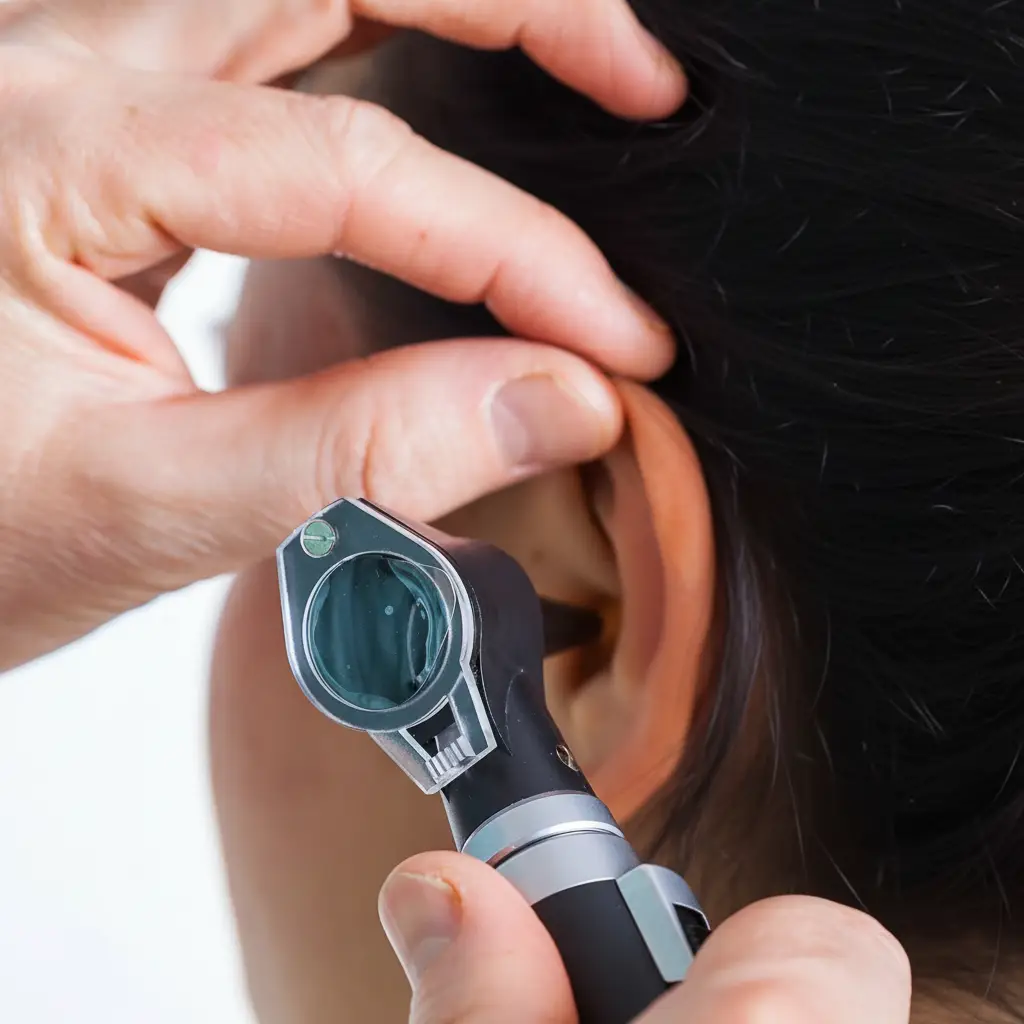
The clinical assessment relies on the patient’s history, the pattern and duration of vertigo, the absence of hearing symptoms and a targeted examination of eye movements and vestibular reflex function. The HINTS examination, a three-part bedside test covering the head impulse test, the pattern of nystagmus and the presence of a skew deviation, is particularly valuable in the acute setting for distinguishing between peripheral and central causes.
In specialist vestibular settings, further objective testing helps characterise the degree and location of vestibular nerve dysfunction. The assessments most commonly used include:
- Video head impulse testing (vHIT): measures the vestibulo-ocular reflex gain for each semicircular canal and identifies which branch of the vestibular nerve is most affected
- Bithermal caloric testing: quantifies the extent of vestibular paresis on the affected side and provides a baseline for monitoring recovery
- Vestibular evoked myogenic potentials (VEMPs): help determine whether the superior or inferior division of the nerve is involved
These investigations are not required to make the diagnosis, but they provide important information for guiding rehabilitation, setting recovery expectations and detecting cases where improvement is incomplete.
How Vestibular Neuritis Is Treated in the UK
Treatment for vestibular neuritis falls into three areas: symptom management in the acute phase, specific drug therapy to support nerve recovery and vestibular rehabilitation to promote central compensation.
Acute Symptom Management
In the acute phase, the priority is managing nausea, vomiting and severe vertigo to allow the person to function and begin moving. Antiemetics and vestibular suppressants are used for this purpose. These are appropriate for short-term use but should not be continued beyond the first few days, as they suppress the neural activity that drives vestibular compensation. Prolonged use of vestibular sedatives delays recovery.
Corticosteroids and the Evidence Behind Them
The role of corticosteroids in vestibular neuritis has been tested in a landmark randomised controlled trial published in the New England Journal of Medicine. The trial found that methylprednisolone significantly improved vestibular function recovery, with the treatment group showing a mean improvement of 62.4 percentage points at 12 months, compared with 39.6 percentage points in the placebo group. Antiviral medication alone did not improve outcomes, and adding it to corticosteroids offered no additional benefit over steroids alone.
Separately, research has shown that without treatment, only approximately one-third of patients recover sufficiently for their caloric test to return to normal. Early steroid treatment, particularly within the first 48 to 72 hours of symptom onset, is associated with better outcomes. It is worth noting that a 2021 systematic review found evidence for short-term benefit from corticosteroids on objective vestibular function measures, whilst acknowledging that evidence for long-term functional benefit remains more limited, and clinical decisions should be made case by case.
Vestibular Rehabilitation
Vestibular rehabilitation is the cornerstone of recovery from vestibular neuritis, and it is recommended once the acute nausea and vomiting are under control. Rehabilitation exercises promote central vestibular compensation by encouraging the brain to recalibrate its balance processing using the remaining intact vestibular input from the unaffected side.
Exercises typically include gaze stabilisation, balance training, habituation exercises and progressive exposure to movement. The benefit of early vestibular rehabilitation on functional outcomes is well established, and those who begin it promptly generally fare better than those who defer or avoid it. Younger patients tend to show greater objective and subjective improvement than older patients, though meaningful recovery is achievable at any age.
Recovery and What to Watch For
Most people with vestibular neuritis see substantial improvement within one to three weeks. The severe vertigo resolves as the acute inflammation settles, and the brain begins compensating for the asymmetry in vestibular input. Residual unsteadiness, motion sensitivity and occasional light-headedness can persist for several months, and some people are left with a measurable reduction in vestibular function on the affected side even after subjective recovery.
A clinically important complication is the development of PPPD following vestibular neuritis. Studies suggest that up to 1 in 4 people who have had a vestibular disorder such as vestibular neuritis may go on to develop persistent postural-perceptual dizziness, a functional vestibular condition characterised by persistent non-spinning dizziness that continues well beyond the point at which the original nerve problem has resolved. Anxiety, high body vigilance and inadequate rehabilitation are all risk factors. Early recognition and appropriate treatment significantly improve outcomes in this group.
BPPV can also develop as a sequel to vestibular neuritis, as the initial viral inflammation may affect the otoconia within the labyrinth as well as the nerve itself. Anyone who develops position-triggered spinning after recovering from vestibular neuritis should be assessed for this possibility.
Frequently Asked Questions
How is vestibular neuritis different from labyrinthitis?
Both conditions involve inner ear inflammation, but they affect different structures. Vestibular neuritis affects only the vestibular nerve, leaving hearing intact. Labyrinthitis involves both the vestibular and cochlear components of the inner ear, producing additional hearing symptoms such as tinnitus or sudden hearing loss alongside the vertigo. If a person has acute vertigo with no change in hearing, vestibular neuritis is the more likely diagnosis.
Is vestibular neuritis contagious?
No. Although vestibular neuritis is associated with HSV-1 reactivation, the virus is not being shed in the way it would be during an active cold sore infection. The reactivation occurs deep within the vestibular ganglion and does not pose a transmission risk to others.
Will my vestibular function fully recover?
Recovery varies considerably between individuals. Many people regain full functional capacity, particularly with early vestibular rehabilitation and corticosteroid treatment where appropriate. However, objective vestibular function testing often reveals a persistent reduction in caloric response on the affected side even in people who feel well. The brain compensates for this through central adaptation, which is why subjective recovery can be complete even when objective measures remain abnormal.
How long does vestibular neuritis last?
The acute phase, with severe, constant vertigo, typically lasts between two days and one week. Residual unsteadiness and motion sensitivity can persist for several weeks to months. A minority experience longer-lasting symptoms, which may indicate incomplete compensation, ongoing inflammation or the development of a secondary condition such as PPPD or BPPV. Anyone whose symptoms are not improving steadily after several weeks should seek specialist review.
When should I see a specialist for vestibular neuritis in the UK?
Specialist assessment is appropriate when the diagnosis is uncertain, when symptoms are not improving as expected, when red-flag neurological features were present at onset, or when residual symptoms are affecting daily life, work or confidence after the acute phase has passed. At Harley Street Audiovestibular Clinic, our audiovestibular physicians have specialist expertise in vestibular neuritis and its aftermath. We carry out objective vestibular function testing, confirm the diagnosis, assess the degree of recovery and ensure that secondary conditions such as PPPD or BPPV are identified and properly managed, giving you a clear picture of where you are in recovery and what to do next.